
Frequently Asked Questions About Duct, Dryer Vent and Chimney Cleaning
Serving New York and nearby cities.
- Diagnosis before any repair
- Photos of what we find
- Written price before we start
These are the questions New York homeowners ask us most about air duct cleaning, dryer vents, HVAC systems, sanitizing and chimney work. We've grouped them by service, with a final section on booking a visit: how to prepare, how long it takes, and what to expect in apartments and co-ops. If your question isn't covered here, reach out and a technician will answer it directly.
How to Reach Us
The easiest way to reach ClearPath is the contact form on this site. Tell us what you'd like cleaned or checked, what kind of building you live in, and a few times that work for you. We'll follow up to confirm the details and schedule your visit.
Including a few specifics up front helps us send the right technician with the right equipment.
- Your address and whether it's a house, apartment, condo or co-op
- The services you're interested in
- Anything you've noticed, such as odors, visible dust or mold, long dryer times, or smoke and draft problems
- Any building rules on work hours, elevator use or access
FAQ
Frequently asked questions
How do I know if my air ducts need cleaning?
The U.S. EPA recommends duct cleaning when there is substantial visible mold growth, signs of vermin such as rodents or insects, or excessive dust and debris. Dust blowing out of the registers is a common sign. If you aren't sure, we can look at your system and tell you what we find.
Will duct cleaning improve my family's health?
We won't promise that. The EPA says duct cleaning has not been shown to prevent health problems. It does remove built-up dust, debris and contamination from your system, and that is often a good enough reason to have it done.
Why does dryer vent cleaning matter?
According to the U.S. Fire Administration, failure to clean is the leading factor contributing to clothes dryer fires in homes. Lint collects in the vent line behind and beyond the dryer, where the lint trap can't catch it. Cleaning the full vent run removes that buildup.
What are the signs of a clogged dryer vent?
Clothes that take more than one cycle to dry are the most common sign. You may also notice the dryer or laundry room getting unusually hot, a burning or musty smell, or a weak airflow at the outside vent hood. Any of these is a reason to have the vent checked.
Can you fix a dryer vent that is too long or badly routed?
Yes. Our Dryer Vent Repair and Rerouting service addresses crushed or disconnected ducts, vents with too many turns, and lines that run farther than they should. A shorter, straighter path moves lint out more easily and helps the dryer work as intended.
What is the difference between air duct cleaning and HVAC system cleaning?
Air duct cleaning focuses on the supply and return ductwork that carries air through your home. HVAC system cleaning also covers components such as the blower, coils and air handler housing. If we find gaps or loose connections, we also offer Air Duct Repair and Sealing.
Do you use chemical treatments in the ducts?
Only when there is a clear reason, and only after we explain what we'd use and why. The EPA advises consumers to be careful with chemical treatments in ductwork, and we agree. In many homes, thorough mechanical cleaning is all that's needed.
Can you get rid of odors coming from the vents?
Our Duct Sanitizing and Odor Removal service targets smells from things like old debris, moisture or past pest activity. We start by finding and removing the source, since an odor treatment alone won't hold if the cause is still there. We'll tell you what we found before we treat anything.
How often should my chimney be inspected?
The NFPA 211 standard calls for chimneys, fireplaces and vents to be inspected once a year. A Level 1 inspection fits when nothing has changed. A Level 2 is used when the system changes, such as a new appliance or fuel switch, or when the home is sold, and a Level 3 is used when a hidden hazard has to be reached by opening part of the chimney or building.
My building is switching its boiler from oil to gas. Does the chimney need attention?
Yes. In New York City, the chimney has to be evaluated as part of an oil-to-gas conversion. A new liner is often needed because gas exhaust produces acidic condensate that can corrode a masonry flue. A chimney inspection can show what your flue needs before the work goes forward.
When is the best time to schedule a chimney sweep?
Before you start relying on your heating system. New York City's heat season runs from October 1 through May 31, so late summer and early fall are a practical time to have the chimney swept and inspected. Booking early also gives time to handle any repairs we find.
What should I do before you arrive?
Clear a path to your furnace or air handler, the dryer, the fireplace and the vent registers. Move fragile items away from work areas, and let us know about any building access rules. If you've noticed specific problems, jot them down so you can point them out to the technician.
How long does a visit take?
It depends on the size of your home, how many vents or registers you have, and which services you've booked. A single dryer vent takes much less time than a whole-house duct and HVAC cleaning. We'll give you an estimate of the time involved when we schedule your visit.
Will the work make a mess in my home?
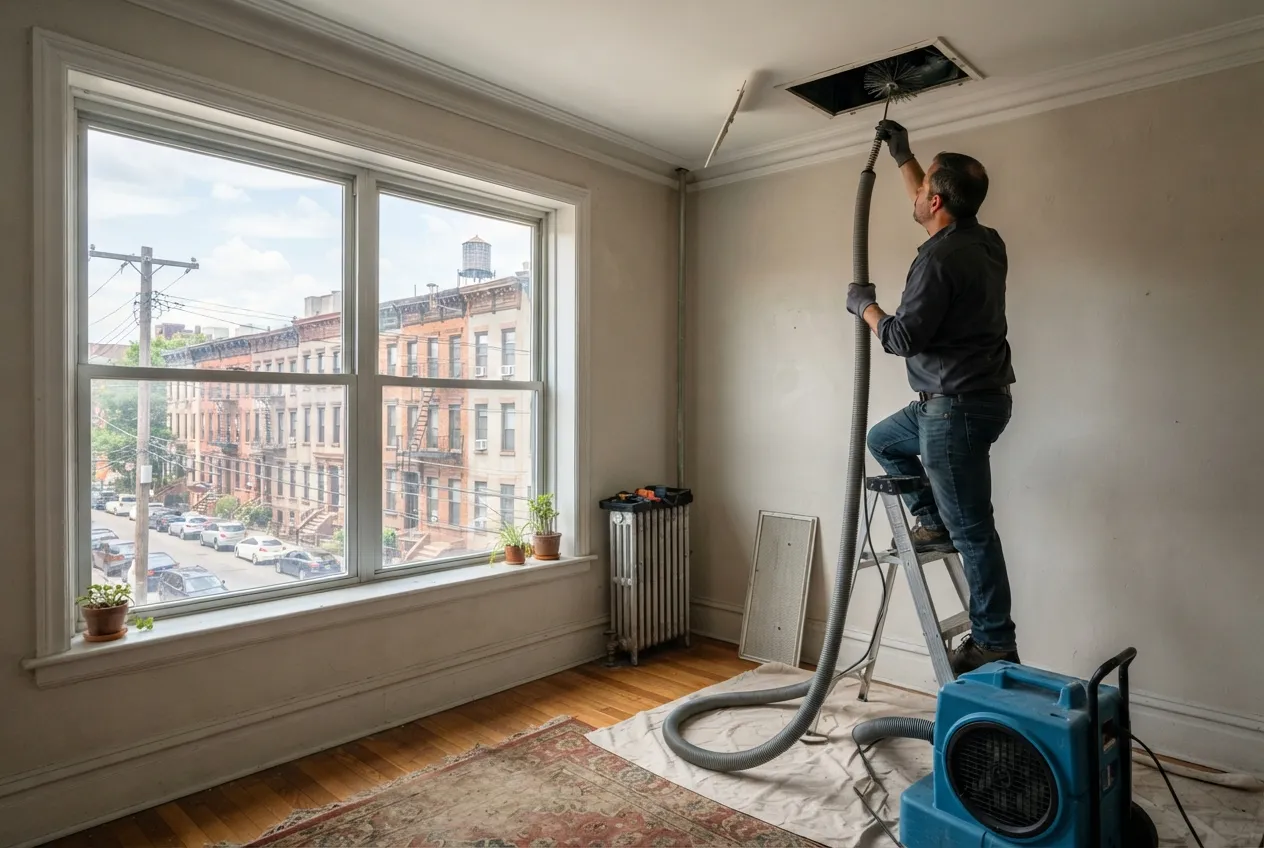
We take care to keep it contained. Technicians lay down floor protection, cover areas around the equipment and use collection equipment to capture dust and debris. We clean up our work area before we leave.
What should I do with my pets during the visit?
We recommend keeping pets in a closed room away from the work areas, or out of the home if that's easier. Our equipment can be loud, and doors may be open while we work. This keeps your pets calm and keeps them from getting underfoot.
Do you work in apartments and co-ops?
Yes. Before booking, check with your building management or board about work hours, elevator reservations and any paperwork they require. Some vents, risers and chimneys are shared and are the building's responsibility, so we'll focus on the parts that serve your unit unless the building arranges otherwise.
Schedule an Inspection
Tell us what you are noticing, whether it is slow drying, dusty vents or a smoky fireplace. We will look at the system, show you what we find, and give you a written price before any work begins.