The short answer
A chimney inspection checks the firebox, damper, flue liner and exterior for buildup, blockages and damage, using a camera to see inside the flue. The NFPA 211 standard calls for an inspection once a year, and a more detailed one when you change fuel or appliances or sell the home.
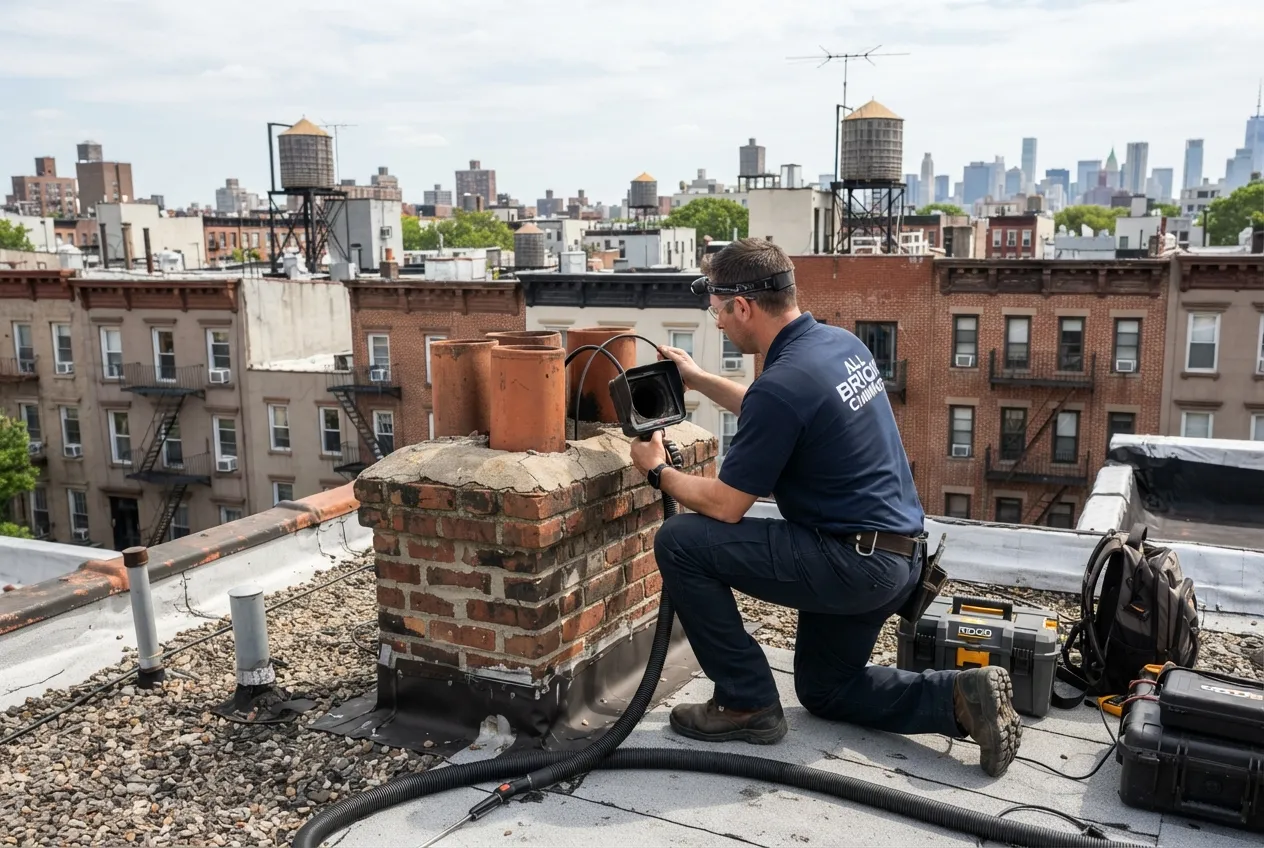
A chimney inspection tells you whether your fireplace, wood stove or boiler flue can carry smoke and exhaust out of your home the way it should. ClearPath Duct Cleaning inspects chimneys in New York and nearby neighborhoods, from brownstone fireplaces to the flue that serves a building's boiler. Our certified technicians check the parts you can see and the parts you can't: the firebox, damper, smoke chamber, flue liner, crown and cap. A camera lets us look inside the flue itself. When we finish, you get a clear account of what we found, photos where they help, and a plain recommendation. That means using the chimney as it is, cleaning it, or repairing something before the next fire or heating season.
Signs you need it
Most owners call us because something changed. A fireplace that drew well last winter now smokes, or there's a smell that wasn't there before. These are the signs worth acting on:
- A musty, smoky or burnt smell from the fireplace, especially on humid days or when the heat comes on
- Smoke rolling back into the room instead of going up the flue
- Debris, chips of tile or masonry, or nesting material falling into the firebox
- Birds, squirrels or other pests in the chimney or on top of it
- Black, flaky or glazed buildup on the damper or inside the smoke chamber
- Water stains near the fireplace, a rusted damper, or white staining on the outside brick
- You bought the home, changed fuel, added a stove insert, or your building converted its boiler from oil to gas
- More than a year has passed since the last inspection
What's included in every inspection
A standard visit is a Level 1 inspection. That is the right choice when nothing about your system has changed. If we find something that needs a closer look, or your situation calls for a Level 2 inspection, we'll explain why before going further. Every inspection covers:
- Firebox: brick, mortar joints and firebrick checked for cracks, gaps and heat damage
- Damper: whether it opens, closes and seals, plus signs of rust or warping
- Smoke chamber and smoke shelf: buildup, debris, and rough or missing mortar coating
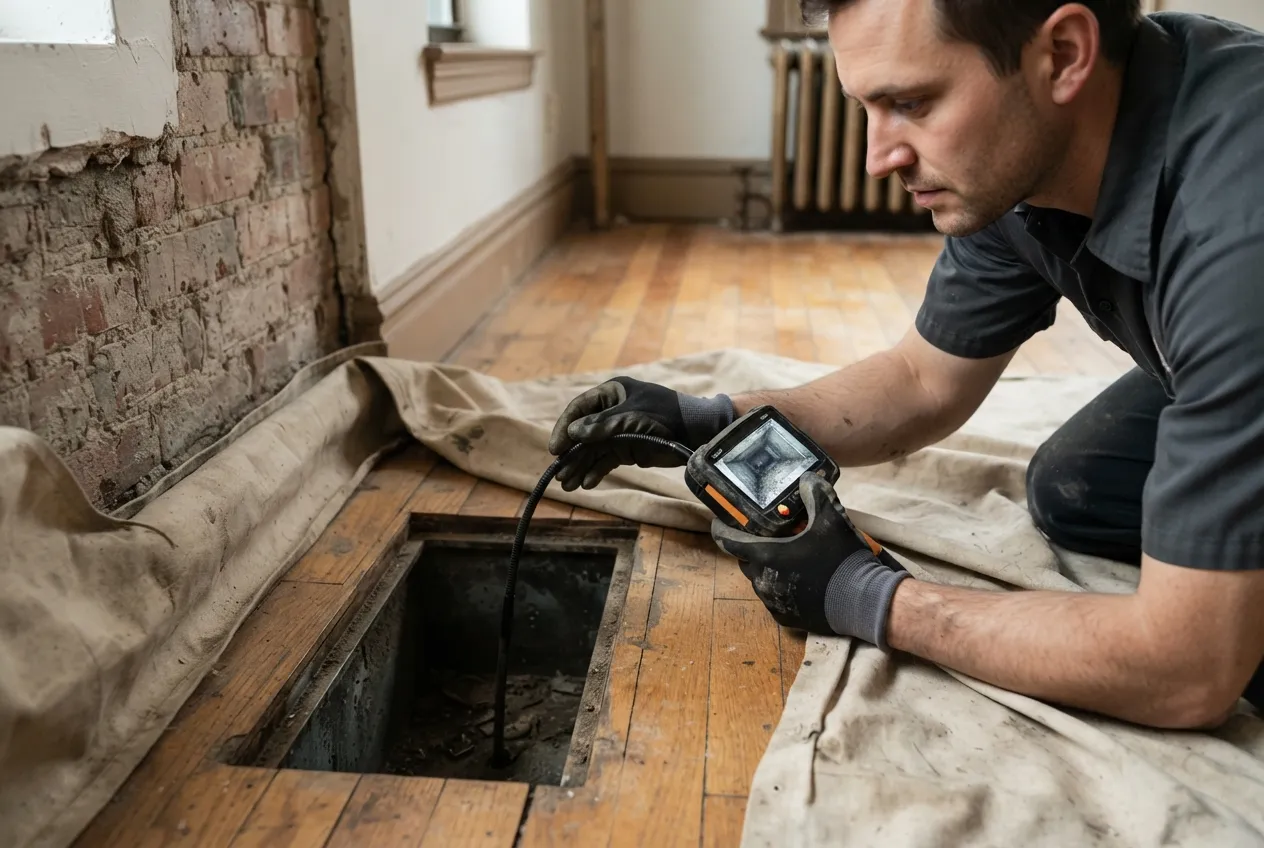
- Flue: a camera scan of the liner for cracks, missing mortar, gaps between tiles and blockages
- Creosote and soot: how much there is and what kind, which tells us whether a cleaning is due
- Connections: the vent pipe or connector from a boiler, furnace, water heater or stove insert
- Exterior and roof, where there is safe access: crown, cap, spark screen, flashing and visible masonry
- Clearances to nearby wood framing and trim, where we can see them
- A written summary with photos and our recommendations
How we work inside your home or apartment
An inspection shouldn't leave soot on your rug. Before we open anything, we lay drop cloths from the door to the fireplace and cover nearby furniture. In apartment buildings, we also keep our path through hallways covered and tidy.
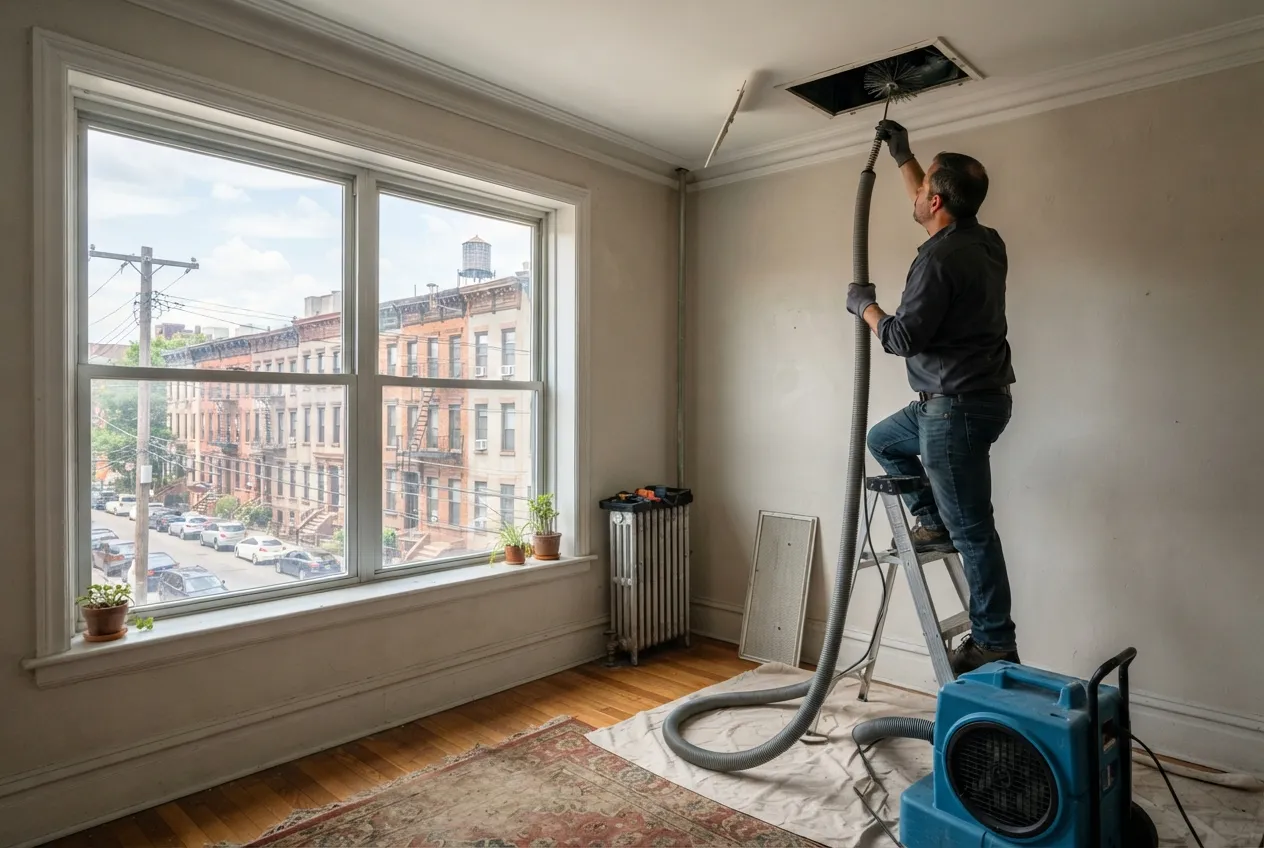
If the flue needs a closer look or a cleaning, we seal the fireplace opening and run a HEPA vacuum under negative pressure. That way, loose soot is pulled into the machine instead of drifting into the room. Rotary brushes and air whips loosen buildup along the flue walls. The camera then shows whether the liner is clean and intact. On boiler and appliance flues, we work through the cleanout and connector.
We don't spray chemicals as a routine add-on. A lingering odor, animal nesting material or visible growth can be a reason to treat. In that case we talk with you first and use only products registered for that use. We don't claim that any treatment improves your health.
Ready for cleaner ducts?
The standards that apply
The NFPA 211 standard calls for chimneys, fireplaces and vents to be inspected once a year. It describes three inspection levels. Level 1 is used when nothing has changed. Level 2 is used when the system changes, such as a new appliance or a switch of fuel, or when the home is sold. Level 3 is used when a hidden hazard can only be reached by opening part of the chimney or the building.
When a New York City building converts its boiler from oil to gas, the chimney has to be evaluated as part of the work. A new liner is often needed, because gas exhaust produces acidic condensate that can corrode a masonry flue.
The city's heat season runs from October 1 through May 31. During that time, building owners must keep apartments heated to minimum temperatures. Scheduling in late summer or early fall leaves time for any cleaning or repair before the heat has to stay on.
What affects the price
Every chimney is different, so we price each inspection after we learn about your home. We tell you the cost before work starts. If we find something that changes the scope, we stop and explain before going further. The main factors are:
- How many flues and appliances the chimney serves
- Chimney height and how we reach it: roof access, ladders or interior cleanouts only
- Condition, such as heavy creosote, blockages or damage that takes longer to document
- Building type: a house, a brownstone, a co-op or condo with building rules, or a multifamily boiler flue
- Inspection level, since Level 2 and Level 3 take more time than Level 1
How a visit works
We keep visits simple and predictable, whether you own a house or live in an apartment. If your building needs a certificate of insurance or has rules about roof access, tell us when you book. We'll work through those details with your management office ahead of time.
- You contact us and describe your fireplace, stove or boiler flue, plus any signs you've noticed
- We confirm a time window and any building access arrangements
- On arrival, the technician walks the space with you and protects floors and furniture
- We inspect inside and out and take camera footage of the flue
- We review the findings with you on site and show you the photos
- You receive a written summary with recommendations, and we can schedule any cleaning or repair you choose