The short answer
Dryer vent cleaning clears lint and blockages from the full duct between your dryer and the outside. That helps loads dry normally and removes a well-documented fire risk. Book one if clothes take longer to dry, the dryer runs hot, or you smell burning, and plan on a check about once a year.
A dryer pushes hot, damp, lint-filled air through a vent to the outside. The lint screen catches most of that lint, but not all of it. The rest settles along the duct walls, in the elbows, and behind the exterior flap. Over time, the dryer ends up pushing against a partial blockage. ClearPath Duct Cleaning cleans dryer vents in houses, townhouses, co-ops and condos across New York and nearby neighborhoods. Our certified technicians clean the full run, from the back of the machine to where the vent ends outside. When we're done, we check that air moves freely. This page explains the signs to watch for, what the work includes, and what to expect on the day of your visit.
Signs you need it
Most dryer vent problems build up slowly. The dryer still runs, so it's easy to blame the machine or the laundry. These are the signs homeowners most often notice:
- Clothes take longer to dry, or a normal load needs a second cycle.
- The dryer, the top of the machine, or the clothes feel unusually hot when the cycle ends.
- A burnt or scorched smell in the laundry area while the dryer runs.
- A musty smell, or clothes that come out damp and smelling stale.
- Weak airflow at the outside vent hood, or a flap that barely opens while the dryer runs.
- Lint collecting behind the dryer, around the vent connection, or on the outside hood.
- Debris, nesting material, or signs of birds or rodents at the exterior opening.
- You don't know when the vent was last cleaned, or it has been a long time.
What's included
Every dryer vent cleaning covers the whole path the air takes, not just the part you can see behind the machine.
We don't treat dryer vents with chemicals as a routine step. Sometimes there is a specific reason to sanitize, such as odor from pest activity or a dead animal in the duct. In that case we discuss it with you first and use only products registered for that use.
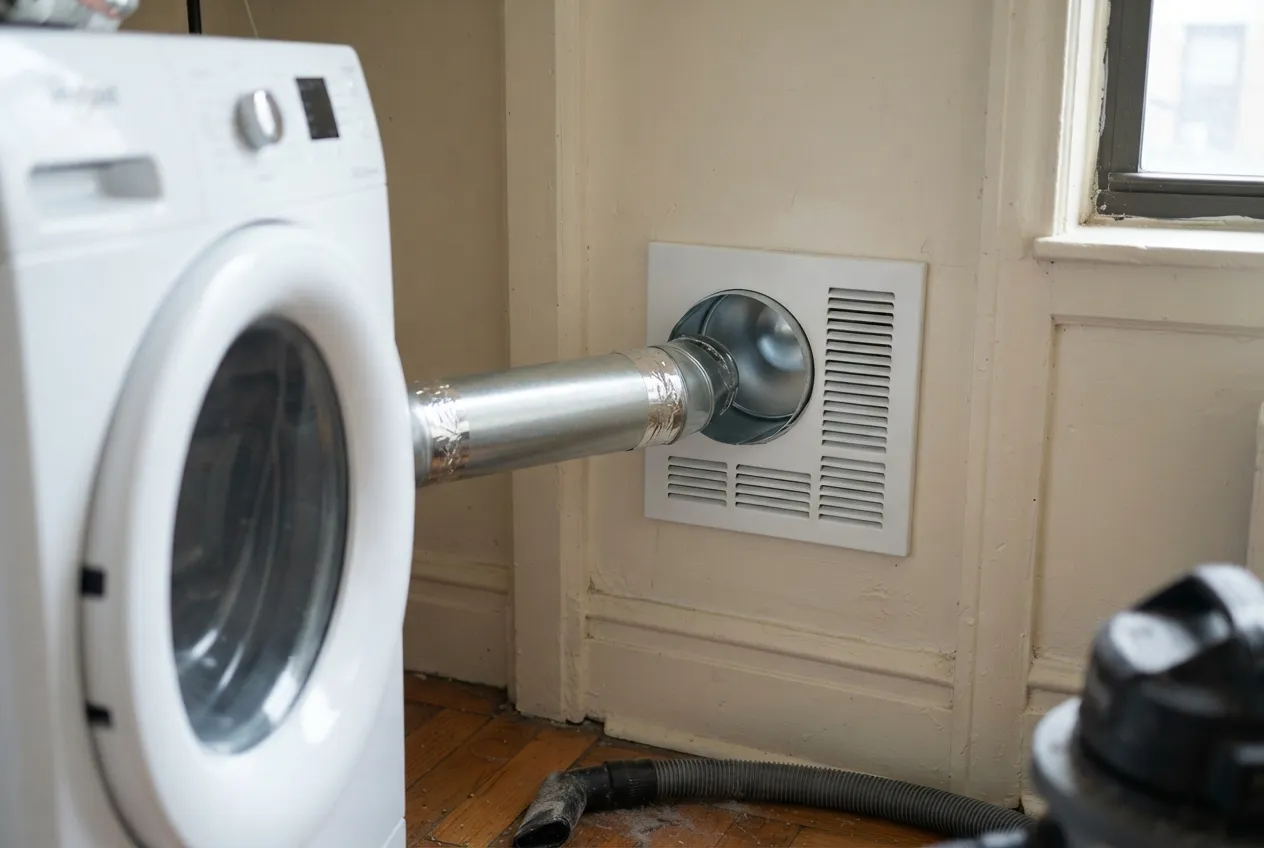
- Pulling the dryer out and disconnecting the transition duct behind it.
- Inspecting the transition duct and replacing it on request if it is crushed, torn, or made of material not suited for dryer use.
- Cleaning the full vent run with rotary brushes sized to the duct.
- Using air whips to loosen packed lint in elbows and long runs.
- Collecting the debris with a HEPA vacuum under negative pressure.
- Cleaning the exterior hood or roof termination where it can be safely reached, and checking that the damper flap opens and closes.
- Removing nesting material or other blockages we find.
- Vacuuming the lint screen housing on the dryer.
- Using a camera inside the duct where the run is long or hidden in walls or ceilings.
- Reconnecting the dryer, running it, and checking airflow at the outside opening.
- A plain explanation of what we found, including damage, loose joints, or routing problems.
How we work inside your home or apartment
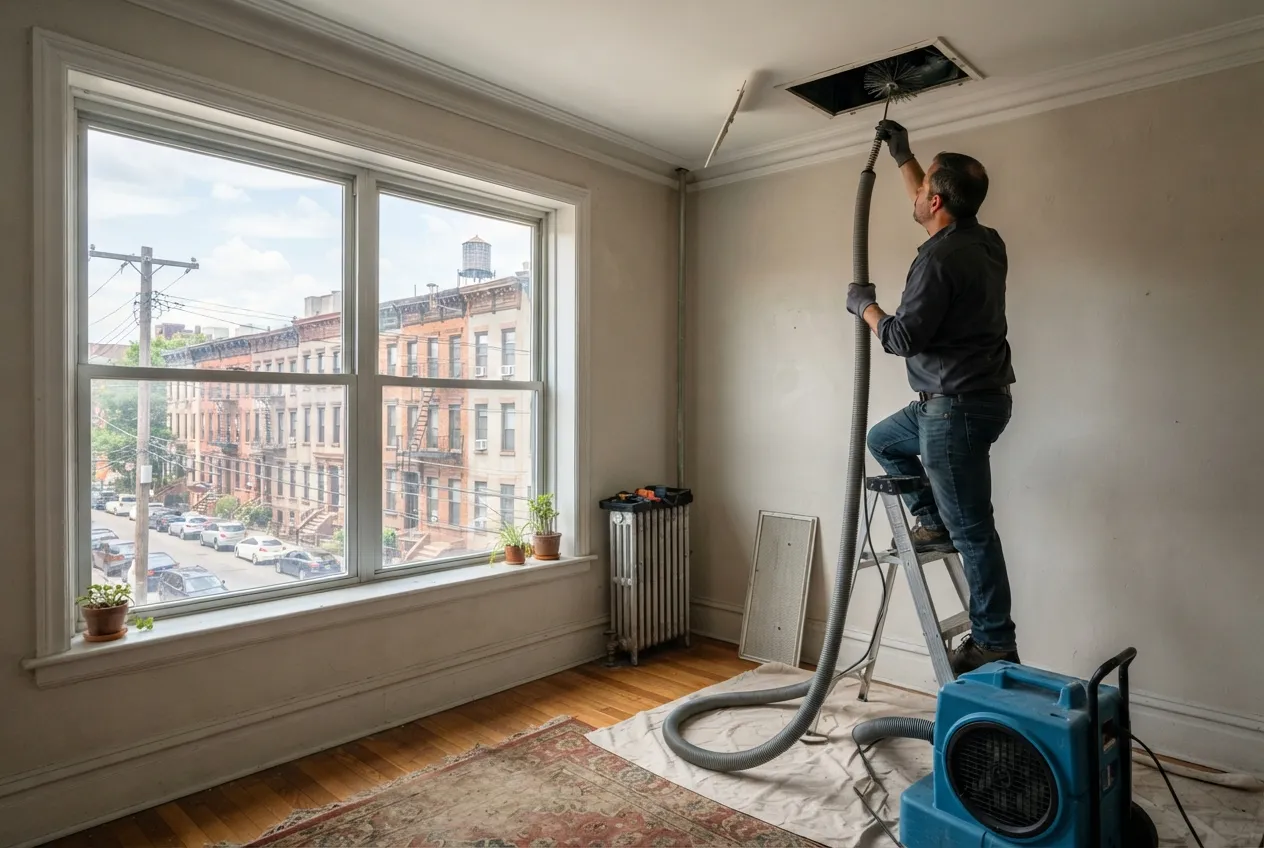
Laundry areas in New York homes are often tight. Your dryer might sit in a hallway closet, a kitchen nook, or a basement corner shared with the boiler. We plan around that. Before we start, we lay drop cloths along the path from your door to the dryer and around the work area. We also cover nearby floors and surfaces.
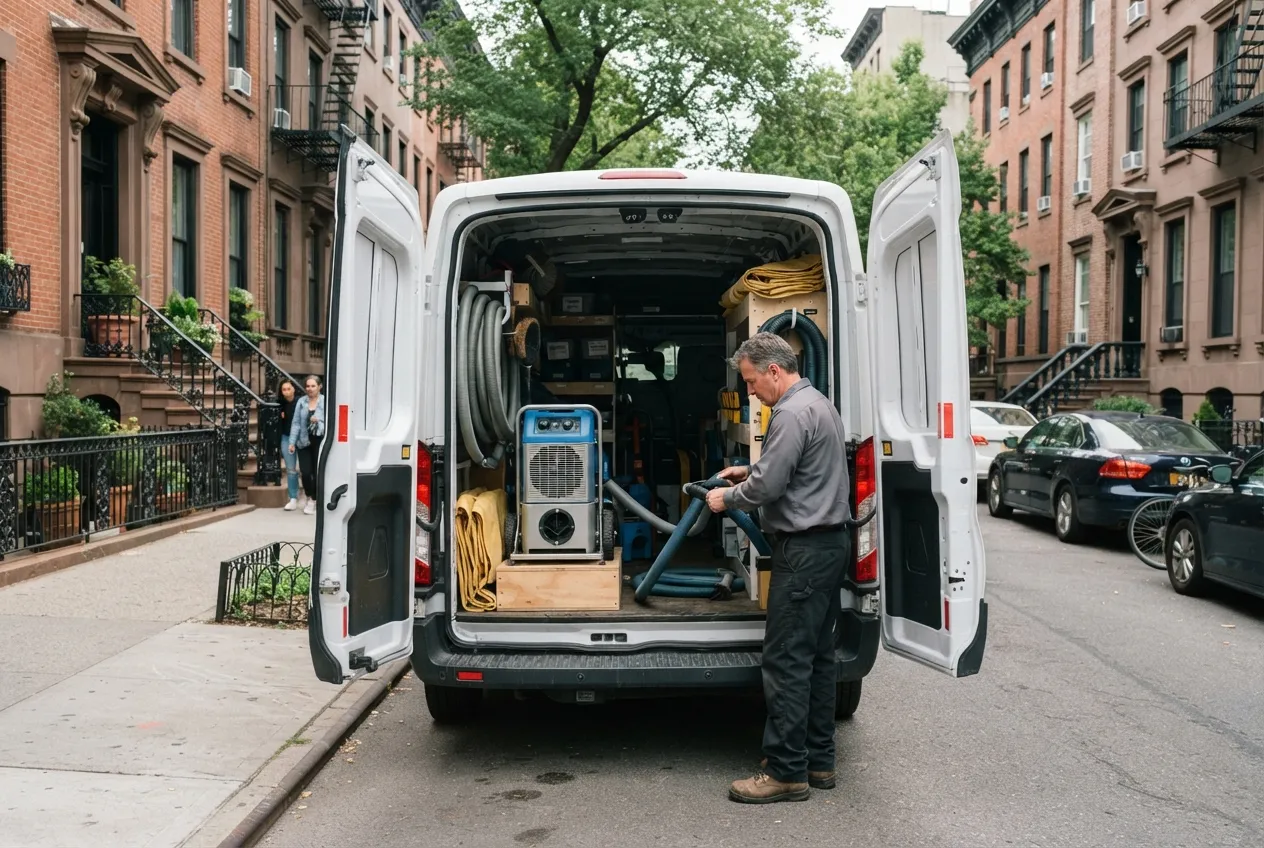
Next, we seal the open end of the duct to our HEPA vacuum so the system runs under negative pressure. This means loose lint is pulled toward the collection unit instead of puffing out into your home. Rotary brushes and air whips then work through the run, loosening lint while the vacuum draws it out. On long or concealed runs, we use a camera to confirm the duct is clear and connected all the way through.
When we're finished, we reconnect the dryer and push it back into place. Then we pick up our covers and vacuum the area we worked in.
In apartment buildings, we follow your building's rules for contractor access, elevator use and work hours. Your vent may end on the roof or in a spot only building staff can open. If so, let us know when you book so access can be arranged ahead of time.
Ready for cleaner ducts?
Why a clean vent matters
According to the U.S. Fire Administration, failure to clean is the leading factor contributing to clothes dryer fires in homes. Lint is light and catches fire easily, and the vent carries hot air right past it on every load.
A clogged vent also makes the dryer work harder. When air can't get out, heat and moisture stay in the machine. Loads run longer, and parts like the heating element are under more strain. Cleaning the vent won't fix a failing dryer, but it removes one of the most common reasons a dryer runs hot or slow.
Between cleanings, empty the lint screen before every load and keep the area behind the dryer clear.
What affects the price
We confirm the price with you before any work starts. These are the main factors:
- The length of the vent run and how many turns and elbows it has.
- Where the vent ends: a ground-level wall, an upper-floor wall, or the roof.
- Access to the dryer and to the exterior termination, including whether we need ladders or roof access.
- The condition of the vent, such as heavily packed lint, crushed sections, or nesting material.
- Building type: a single-family house, a townhouse, or an apartment in a larger building with access rules.
- Whether you want the transition duct or exterior hood replaced, or a second dryer vent cleaned during the same visit.
How a visit works
First, you contact us and tell us about your dryer, where the vent seems to end, and any signs you've noticed. We'll ask about building access and set up a time that works for you.
On the day, the technician looks over the setup, explains the plan, and confirms the price. They protect the work area, clean the vent from the dryer to the outside, and run the dryer to check airflow.
Before leaving, the technician walks you through what they found and anything worth repairing. For many homes, a yearly cleaning is a sensible schedule. Households that run the dryer every day, or that have long vent runs, may need it more often.
Dryer Vent Cleaning by city
- Dryer Vent Cleaning in Upper East Side
- Dryer Vent Cleaning in Carnegie Hill
- Dryer Vent Cleaning in Yorkville
- Dryer Vent Cleaning in Lenox Hill
- Dryer Vent Cleaning in Roosevelt Island
- Dryer Vent Cleaning in Old Astoria
- Dryer Vent Cleaning in Upper West Side
- Dryer Vent Cleaning in Hallets Point
- Dryer Vent Cleaning in East Midtown
- Dryer Vent Cleaning in Turtle Bay
- Dryer Vent Cleaning in Lincoln Square
- Dryer Vent Cleaning in Queensbridge