The short answer
Commercial duct cleaning makes sense when a space has heavy dust, renovation debris, pests or visible mold in the ducts. ClearPath's certified technicians clean every reachable supply and return run with rotary brushes, air whips and a HEPA vacuum under negative pressure, and quote after an inspection.
Many New York homeowners also own or look after a commercial space: a storefront below their apartment, a mixed-use brownstone, a small professional office, or a walk-up where shops and apartments share a building. ClearPath Duct Cleaning cleans the supply and return ducts in these spaces with the same contained process we use in homes. We inspect first, explain what we find, and recommend cleaning only when the system needs it. This page covers the warning signs, what is included, how our crew works, what affects the price, and how a visit runs.
Signs you need it
Commercial systems often run longer hours and handle more foot traffic and outside air than a typical apartment, so problems can show up sooner. These are the signs owners notice most often:
One sign alone does not always mean the ducts need cleaning. A clogged filter or a closed damper can also cause weak airflow, and a quick inspection tells us which it is.
- Dust blowing out of supply registers when the system starts, or settling on shelves, counters and equipment soon after you wipe them
- Fine drywall or plaster dust left in the ducts after a renovation, build-out or tenant change
- Debris, droppings, nesting material or insects visible behind register covers or inside return grilles
- A musty smell when the heat or air conditioning turns on, or a burnt, dusty odor at the start of the heating season
- Weak airflow from some vents while others blow normally, or rooms that never reach the set temperature
- Visible mold growth on duct surfaces, around the air handler or near the coil
What is included
Every commercial duct cleaning covers the full air path, not just the vents you can see. Before we start, we confirm the scope with you so you know exactly which runs and components we will clean.
- Walk-through and camera inspection of supply and return ducts before cleaning
- Removal, washing and reinstallation of register covers and return grilles
- Agitation of every reachable supply and return run with rotary brushes and air whips
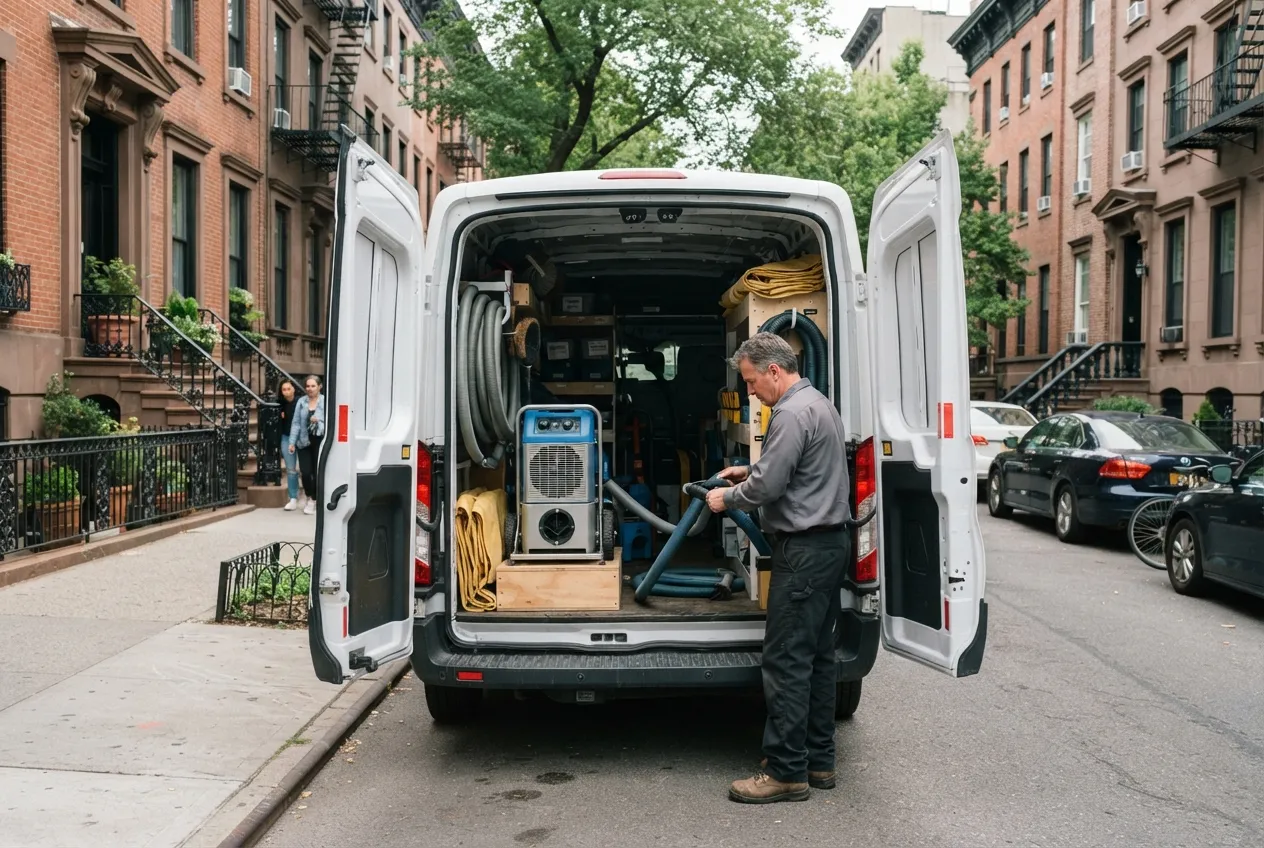
- Continuous extraction with a HEPA vacuum that keeps the duct system under negative pressure
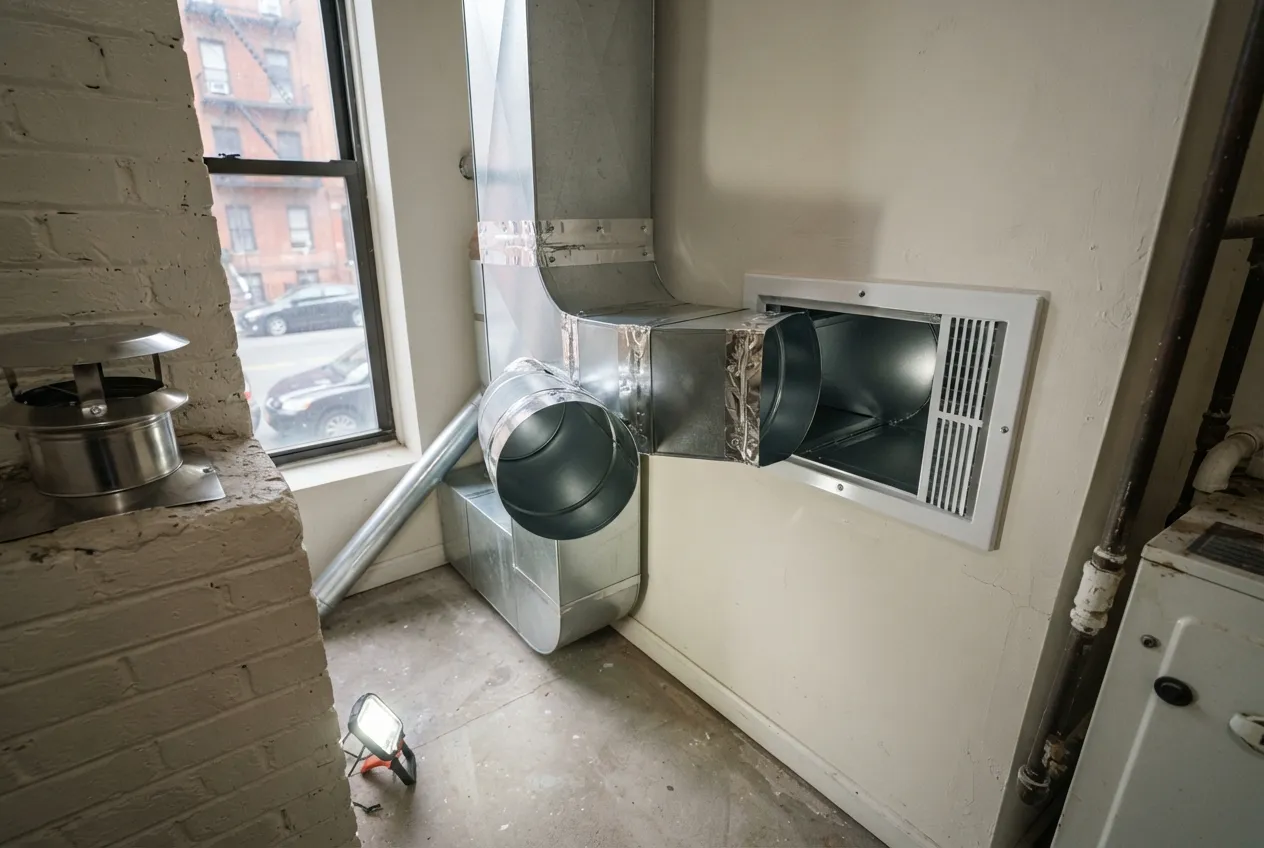
- Cleaning of the supply plenum, return plenum and accessible trunk lines
- Cleaning of the blower compartment and accessible air handler surfaces
- A filter check, with replacement if you have a filter on hand or ask us to bring one
- Before-and-after photos from the duct camera
- A written summary of what we found, including anything that needs a mechanical contractor
How our crew works inside your space
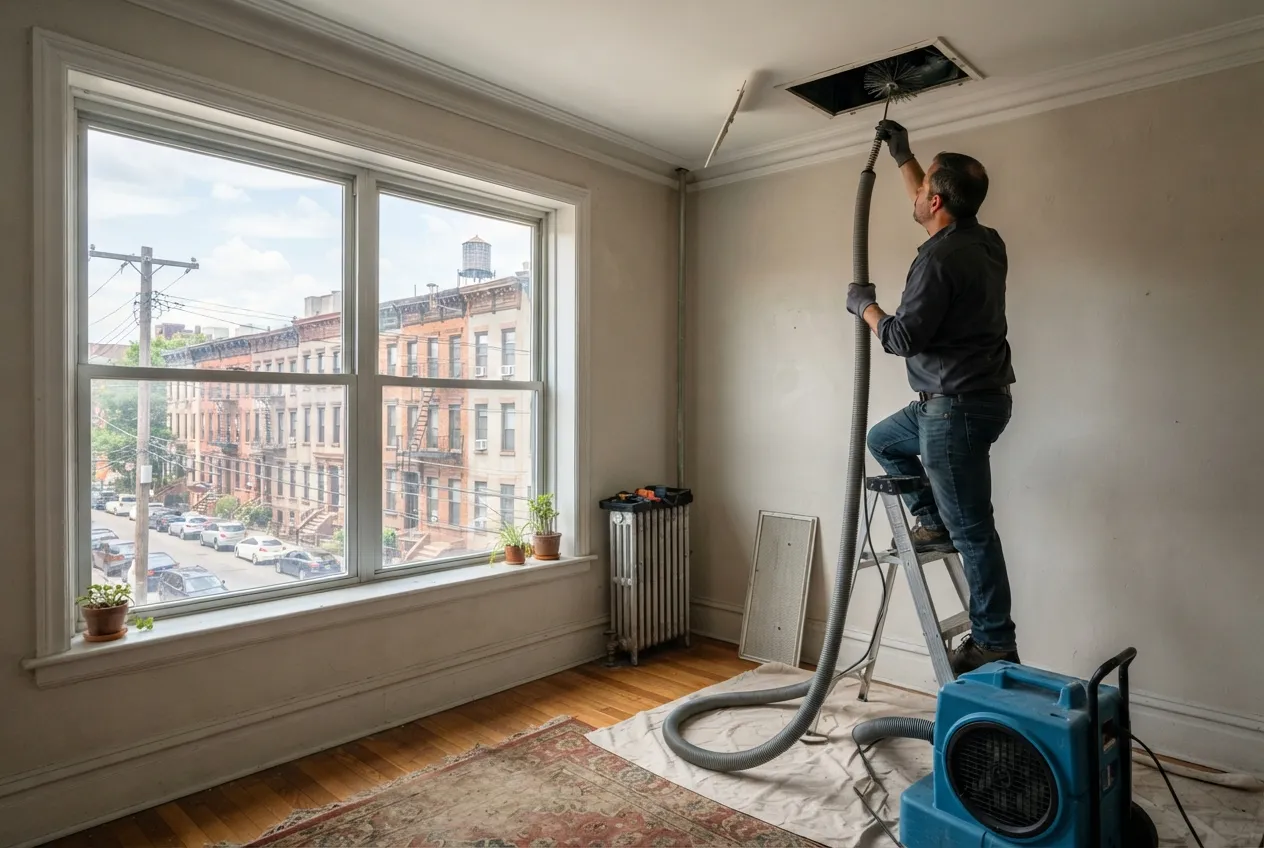
Many of the spaces we clean are in use: a shop with customers, an office with staff, or a mixed-use building with tenants upstairs. Our certified technicians lay drop cloths from the entrance to the work area and around each register and the air handler. We cover furniture, inventory and equipment near the vents.
Before brushing, we seal the registers we are not working on so loosened dust cannot blow back into the room. A HEPA vacuum connects to the main trunk and pulls the whole system under negative pressure, so debris moves toward the collector instead of into your space. We then work each run with rotary brushes and air whips sized to the duct, from the farthest vent back toward the trunk.
Where a duct is hidden above a ceiling or inside a wall, we use a camera to check it before and after cleaning. If a run can only be reached by lifting a ceiling tile or opening an access panel, we ask first. We can schedule early mornings or after closing so the work does not interrupt business, and we put every cover back and clean up before we leave.
Ready for cleaner ducts?
What the EPA says about duct cleaning
The U.S. Environmental Protection Agency advises cleaning air ducts when there is substantial visible mold growth, vermin, or excessive dust and debris. It also says duct cleaning has not been shown to prevent health problems. We take that at face value: we clean ducts to remove dirt, debris and contamination, and we do not promise health results.
The EPA also warns consumers to research the process before responding to very cheap advertised offers, and to be careful with chemical treatments. That is why we do not spray sanitizers or coatings as a routine add-on. If there is a specific reason, such as a lingering odor, a pest problem or visible growth, we explain the option and use only products registered for that use. If you would rather skip it, we skip it.
If your space shares a building with apartments, keep in mind that New York City's heat season runs from October 1 through May 31, when building owners must keep apartments heated to the city's minimum temperatures. Planning duct work around the building's heating needs keeps tenants comfortable.
What affects the price
Every commercial space is different, so we quote after we see the system. You get the scope and the quote before any cleaning starts. The main factors are:
- The number of supply and return vents
- The total length of the duct runs and how easy they are to reach, including drop ceilings, soffits and rooftop equipment
- The condition of the ducts, such as heavy construction dust, debris or pest activity
- The building type: a single storefront, an office floor, a mixed-use building or a multi-unit property
- Whether the work has to happen after hours or around tenants and customers
How a visit works
A small storefront often takes part of a day. Larger offices or buildings with many runs can take longer, and we can split the work across visits if that suits your schedule.
- You tell us about the space, the system and what you have noticed
- We schedule a time that fits your hours, including early or after-closing slots
- On arrival, we protect the work area and inspect the ducts with a camera
- We go over the findings and the scope with you before we begin
- We clean, reinstall covers, check airflow at the registers and clean up
- You receive photos and a short written summary