The short answer
If clothes take longer to dry, the dryer runs hot or you smell something burning, the vent is often crushed, disconnected, clogged or routed too far. ClearPath inspects the full run, repairs it or reroutes it to a shorter path where needed, and cleans it so the dryer can push air outside freely.
A dryer vent that is crushed, disconnected, too long or routed through too many turns makes your dryer work harder and lets lint build up where you can't see it. ClearPath Duct Cleaning repairs and reroutes dryer vents in houses, townhouses, co-ops and condos across New York City and nearby neighborhoods. We find where airflow is being lost and fix or replace the damaged sections. When the existing path doesn't make sense, we plan a shorter, simpler route to the outside. Our certified technicians clean the full run as part of the job so the repaired vent starts clear, and we show you what we found before any repair work begins.
Signs you need it
Most dryer vent problems look like a failing dryer, even when the machine itself is fine. If you notice any of the following, the vent is worth checking before you replace the appliance.
- Clothes take longer to dry or need a second cycle
- The dryer, or the laundry area, feels unusually hot during a cycle
- You notice a burnt or musty smell when the dryer runs
- Airflow at the outside hood is weak, or the flap barely opens
- Lint collects behind the dryer, around the connection or at the exterior hood
- There is debris, nesting material or pests in the duct or at the outside opening
- The hose behind the dryer is kinked, crushed against the wall or pulled loose
- The vent uses plastic or foil accordion hose, or it was patched together during a renovation
What's included
Every repair or reroute starts with an inspection of the whole run, from the back of the dryer to where the vent ends outside. Depending on what we find, the work includes:
- Inspection of the transition hose, wall connection, concealed duct and exterior hood, with a camera where the run passes through walls, ceilings or chases
- Cleaning of the full vent run with rotary brushes and air whips
- Replacement of crushed, torn, sagging or disconnected sections
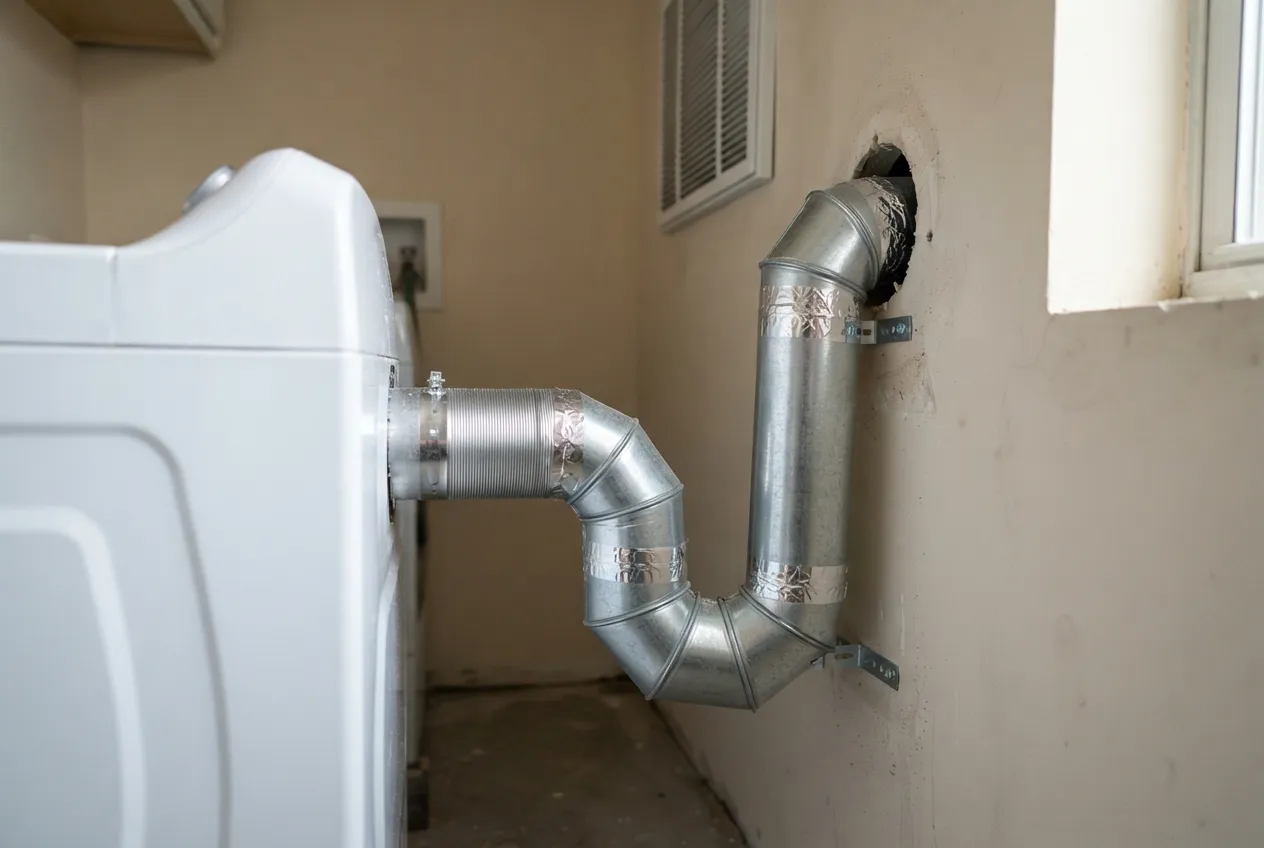
- Replacement of plastic or foil accordion hose with smooth-walled metal duct where the space allows
- Rerouting to shorten the run or remove unnecessary turns when the current path restricts airflow
- Sealing joints with foil tape instead of screws that protrude into the duct and catch lint
- Repair or replacement of the exterior hood with a damper that closes against pests without a lint-catching screen
- An airflow check at the outside after the work, plus a walk-through of what we found and what we changed
How we work inside your home or apartment
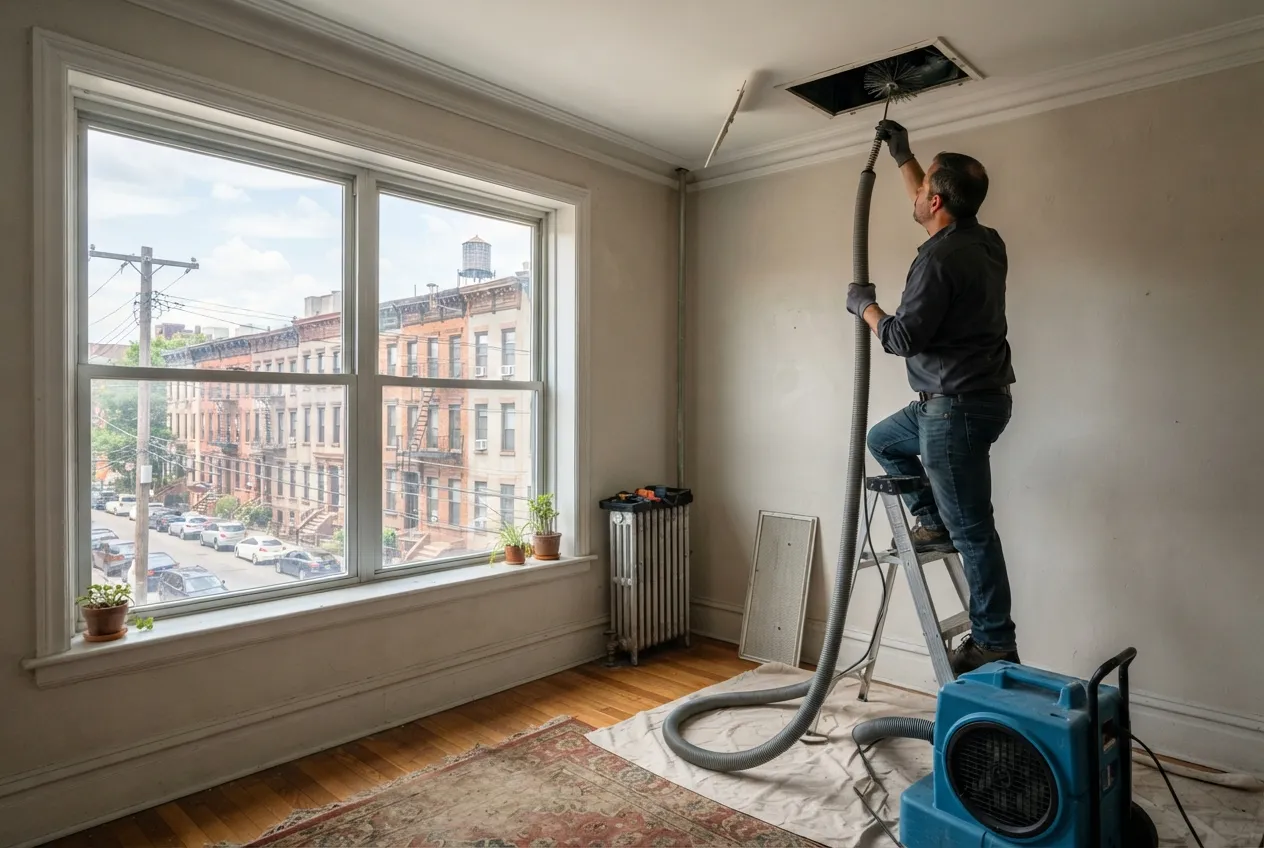
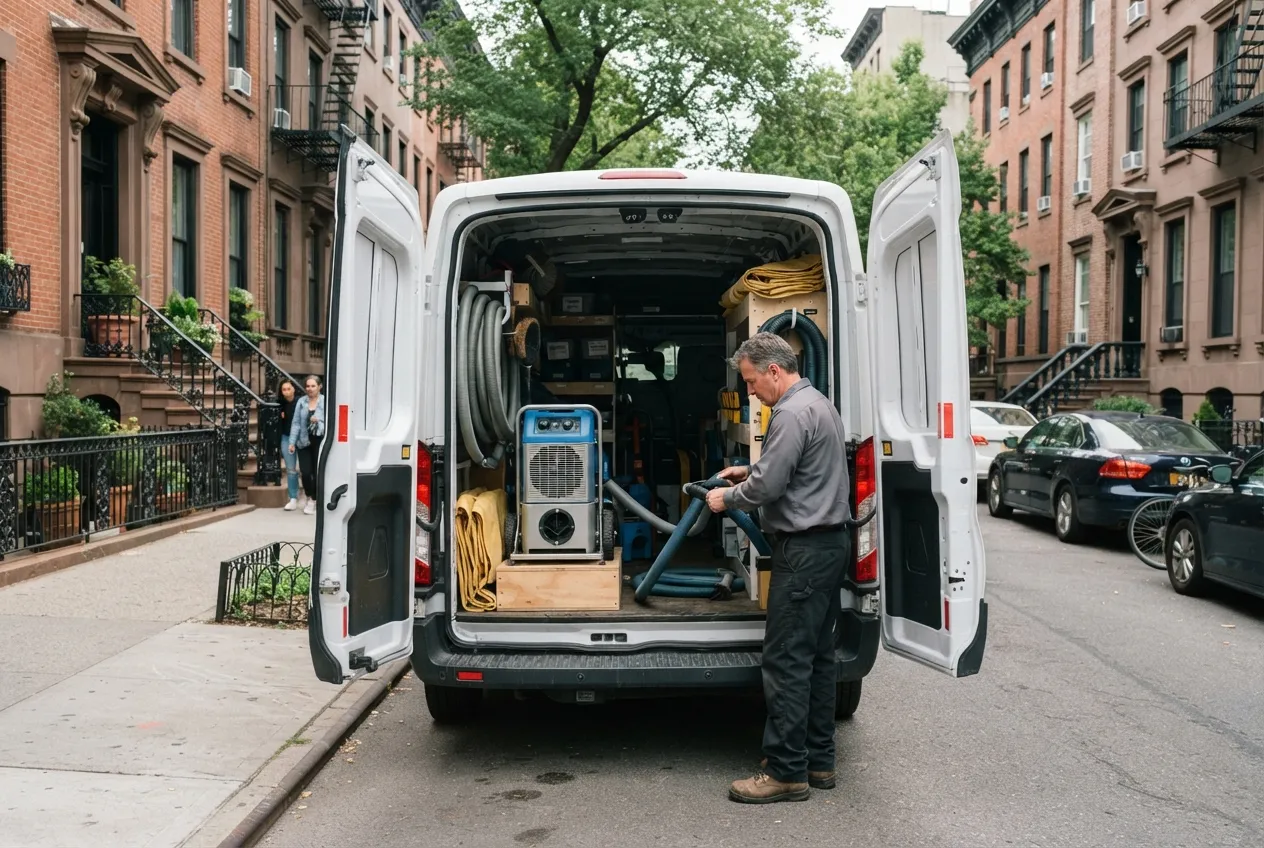
We lay drop cloths along the path from your door to the laundry area and under the work zone before we move the dryer. Open duct ends and any nearby registers are sealed off so loosened lint and dust stay inside the system we're cleaning. A HEPA-filtered vacuum runs under negative pressure while we work, pulling debris out as rotary brushes and air whips break it loose from the duct walls. Where the run is hidden, we use a camera to look for crushed sections, disconnected joints and blockages before and after cleaning.
In apartments, co-ops and condos, we work around your building's rules. We can coordinate with your super or managing agent on elevator use, work hours and access. If a reroute would pass through a shared wall or change an exterior opening, we'll tell you up front so you can check what approvals your building requires.
We don't fog or spray chemicals as a routine add-on. If there is a specific reason, such as a lingering odor, pest activity or visible growth inside the duct, we only use products registered for that use, and we explain what we plan to apply and why before using it.
Ready for cleaner ducts?
Why a well-routed dryer vent matters
According to the U.S. Fire Administration, failure to clean is the leading factor contributing to clothes dryer fires in homes. Lint is light and burns easily, and it collects fastest where a vent is long, sags, has many turns or has been crushed behind the machine.
Repairing and rerouting focuses on the cause, not just the buildup. A shorter, smoother run with sealed joints moves moist, hot air outside with less effort and is easier to keep clean afterward. For gas dryers, a vent that has come apart can also release exhaust into the home, which is one more reason to fix a loose or damaged connection promptly.
What affects the price
Every dryer vent is different, so we quote after we've seen the run. We give you a written quote before any repair work starts. The main factors are:
- Length of the run and the number of turns between the dryer and the outside
- Access, including runs behind finished walls, above ceilings, inside closets or ending high on an exterior wall or roof
- Condition of the vent, such as crushed sections, disconnected joints, heavy lint or pest debris
- Scope of work, from replacing a short section or the transition hose to a full reroute and new exterior hood
- Building type, since a house, townhouse and apartment building each come with different access and building rules
How a visit works
When you contact us, we'll ask about your dryer, where the laundry area is and what you've noticed. If you live in an apartment building, we'll also ask about building access so the visit goes smoothly.
On the day of the visit, the technician protects the floors, pulls the dryer out and inspects the full run, using a camera where it's hidden. We show you what we found and explain your options, whether that's a simple repair, a section replacement or a reroute. Once you approve the work, we clean the run, make the repairs, reconnect the dryer and check airflow at the outside. Before we leave, we clean up the work area and walk you through what we did, along with any simple habits that help keep the vent clear.