The short answer
A chimney sweep removes soot, creosote and debris from your flue, smoke chamber and firebox, and includes a visual check of the system. The NFPA 211 standard calls for chimneys, fireplaces and vents to be inspected once a year, so most homeowners book a sweep and inspection annually, ideally before heating season.
Every fire in a fireplace or wood stove leaves soot and creosote inside the flue, and every heating season adds more. Over time that buildup narrows the flue, weakens the draft, and gives a stray spark something to catch on. ClearPath Duct Cleaning sends certified technicians to sweep and inspect chimneys in houses, townhouses and apartment buildings across New York and nearby neighborhoods. We clean the flue from top to bottom, look closely at what we can reach, and show you what we found. If something needs repair, we explain it in plain terms and leave the decision to you. We keep your home clean while we work.
Signs you need a chimney sweep
Many chimney problems are easy to miss because the flue is out of sight. These are the signs New York homeowners most often notice before they call us. If you see one or more, it is worth having the chimney swept and inspected before your next fire.
- A burnt, smoky or campfire smell from the fireplace, often stronger on humid days or when the air conditioning runs
- A musty or damp odor near the hearth, which can point to water getting into the chimney
- Smoke that drifts into the room instead of drawing up the flue
- Black flakes, soot or crumbled debris falling into the firebox or onto the damper
- Scratching or chirping in the chimney, or twigs and nesting material in the firebox
- Fires that are hard to start or keep going, a common sign of weak draft
- A shiny, tar-like glaze on the damper or flue walls
- More than a year since the last sweep and inspection
What's included in a chimney sweep
A standard visit covers one flue serving a fireplace, wood stove or similar appliance. If your home has more than one flue, we clean and check each one we're scheduled for. Here is what the visit includes.
- Drop cloths over the hearth, nearby floor and furniture along our work path
- Sealing the fireplace or appliance opening so soot stays inside the system
- A HEPA vacuum running under negative pressure through the entire cleaning
- Rotary brushes sized to your flue to remove soot and creosote from the liner
- Cleaning the smoke chamber, smoke shelf and damper area
- Removing loose debris and nesting material we can safely reach
- Cleaning out the firebox
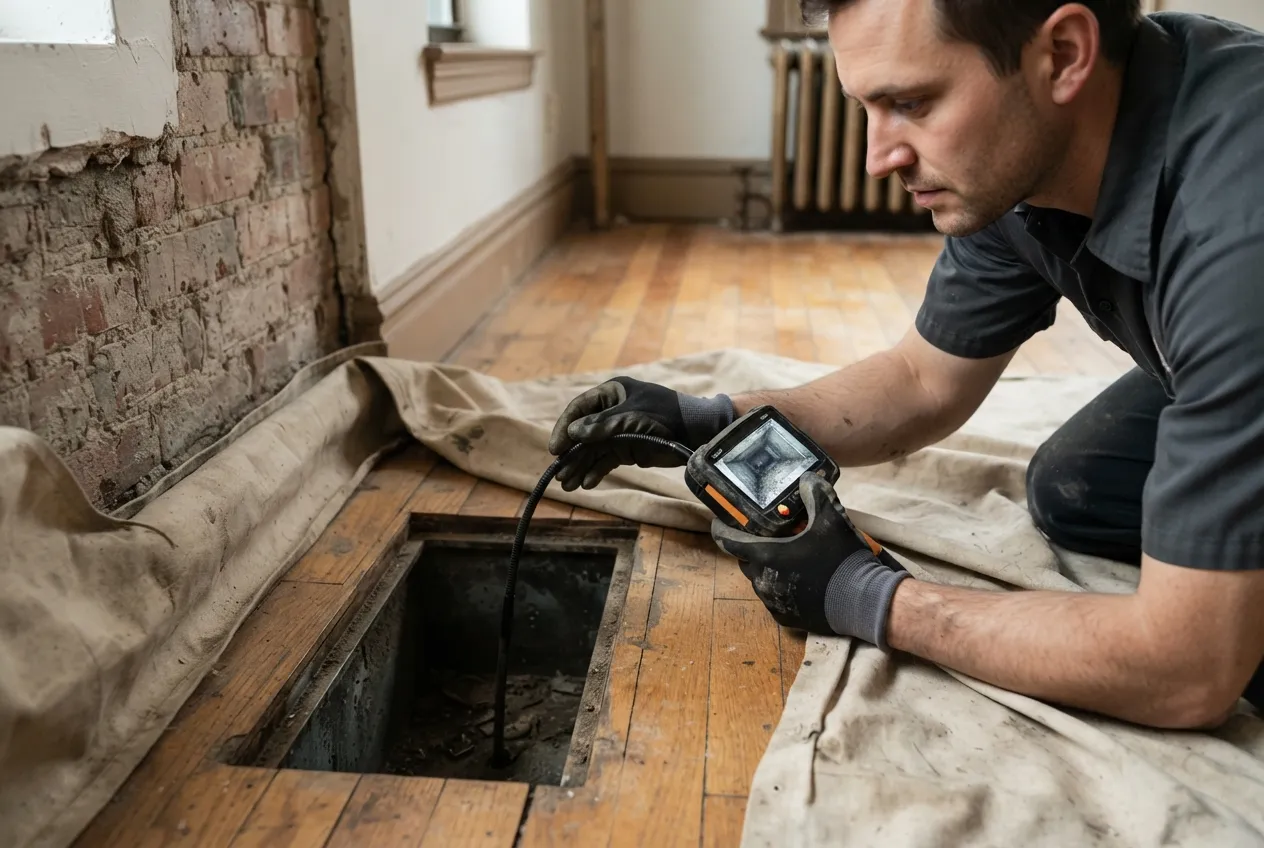
- A camera look inside the flue where the access and liner allow it
- A visual check of the damper, firebox, cap, crown and visible masonry
- Photos and a plain-language explanation of anything that needs attention
How we work inside your home or apartment
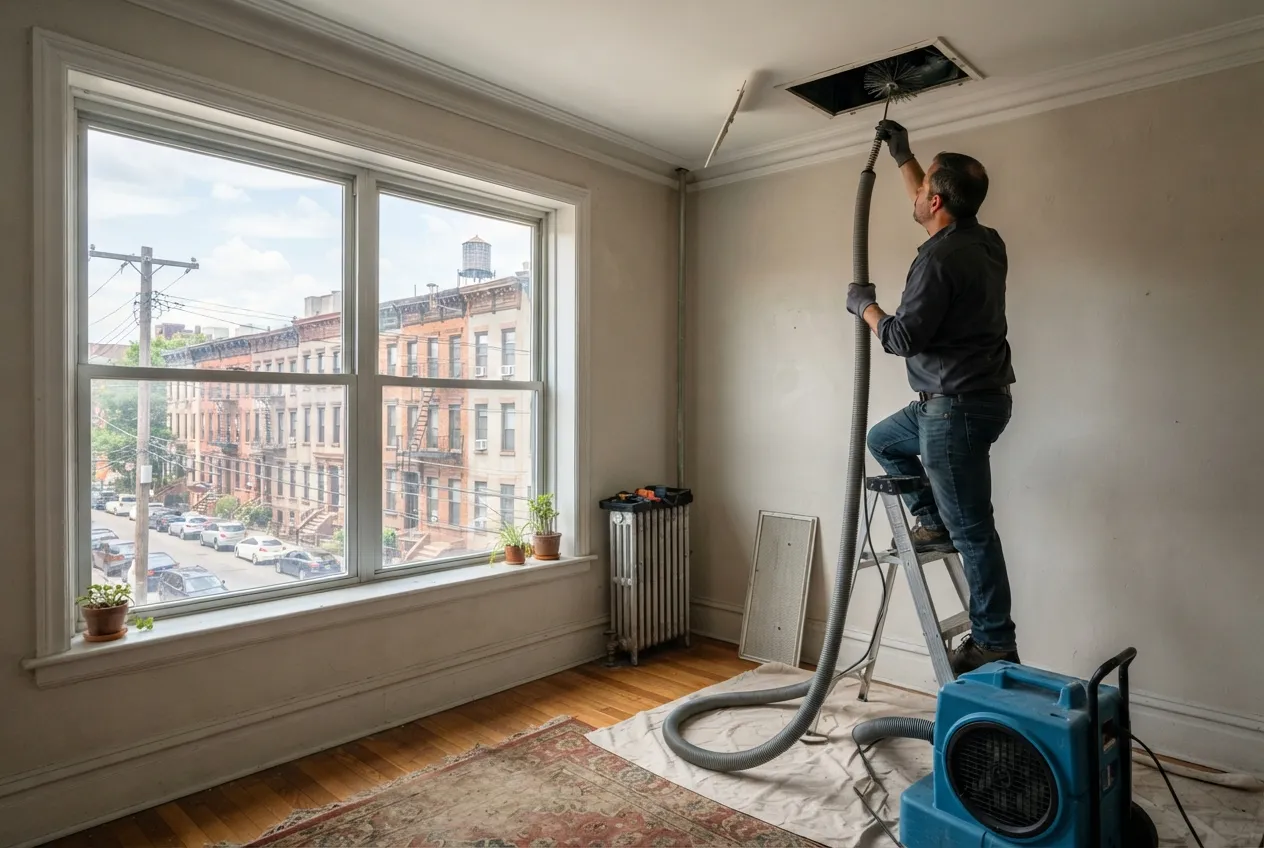
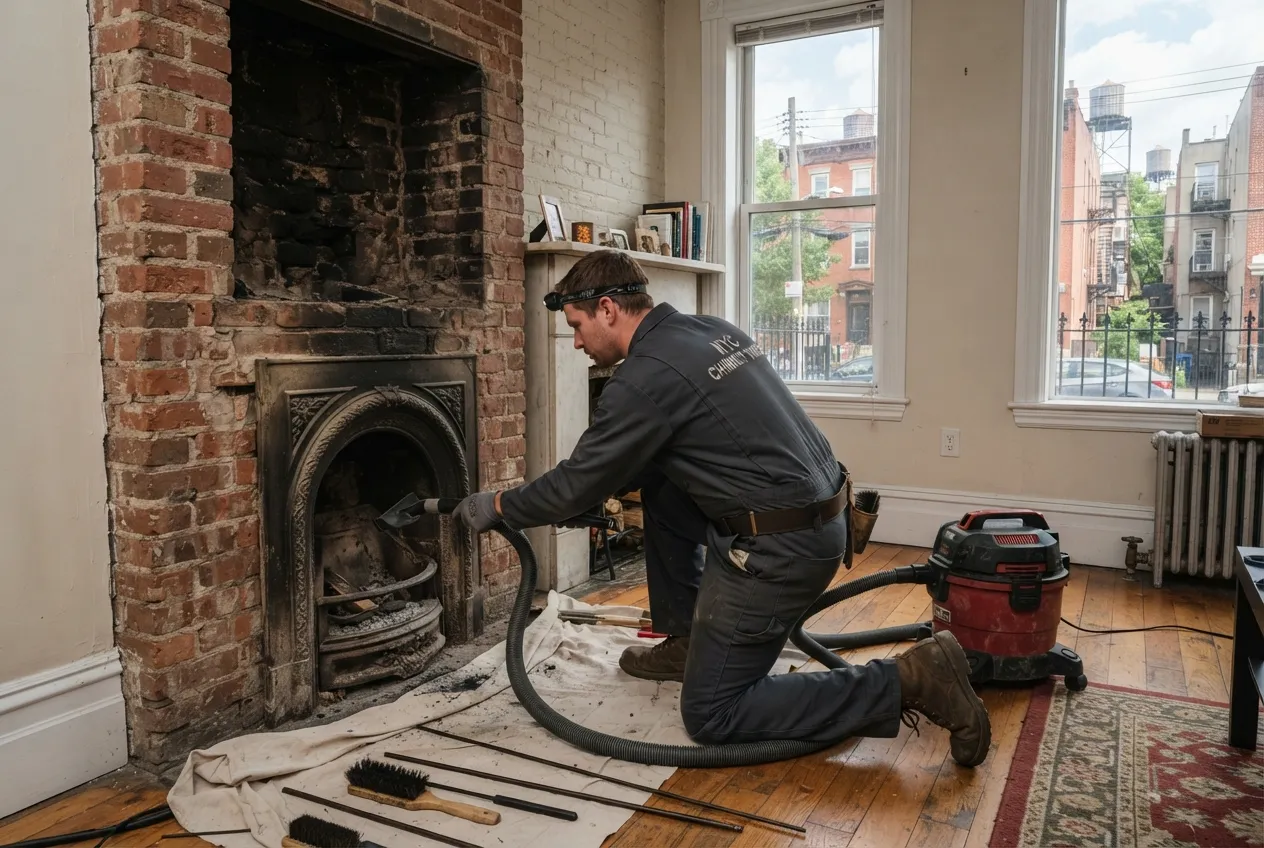
Chimney cleaning moves a lot of fine soot, so we set up before any brush goes into the flue. The crew lays drop cloths from the entry to the fireplace and covers the hearth and anything close to it. We then seal the fireplace opening and connect a HEPA vacuum that keeps the system under negative pressure. That means air is pulled into the chimney rather than pushed out into your living room, and the soot we loosen goes into the vacuum's filter instead of onto your rug.
We clean with rotary brushes matched to the size and type of liner, working the full length of the flue. Depending on the building, we work from the fireplace, from the roof, or both. In apartment buildings we plan around elevator access, building rules and the super's schedule, and we keep hallways clear. Where it fits, we run a camera through the flue so you can see the liner condition for yourself. Before we leave, we pull up the covers, vacuum the work area and walk you through the photos.
Ready for cleaner ducts?
The yearly inspection standard and New York conversions
The NFPA 211 standard calls for chimneys, fireplaces and vents to be inspected once a year. Chimney professionals use three levels of inspection. Level 1 is the routine check when nothing about the system has changed. Level 2 applies when something changes, such as a new appliance or a switch of fuel, or when the home is sold. Level 3 is used when a hidden hazard has to be reached by opening part of the chimney or building. A regular sweep pairs naturally with the yearly Level 1 check.
Fuel changes matter in New York. When a city building converts its boiler from oil to gas, the chimney has to be evaluated as part of the work. A new liner is often needed, because gas exhaust produces acidic condensate that can corrode a masonry flue. If your building is planning a conversion, we can look at the existing flue and tell you what we see.
What affects the price
Every chimney is a little different, so we quote after we know what we're working with. These are the main factors. We don't use chemical treatments as a routine add-on. If there is a reason, such as a lingering odor, animal activity or visible growth, we only use products registered for that use and we explain why before applying anything.
- The number of flues and the appliances they serve
- Chimney height, roof access and whether we can work from the top
- How much soot and creosote has built up, and whether it has glazed
- The type and condition of the liner
- Building type, from a single-family house to a walk-up or an elevator building with access rules
- Whether a camera inspection or a more detailed inspection is needed
How a visit works
When you contact us, we ask about your chimney: what it serves, how often you use it, when it was last cleaned and anything you've noticed. That helps us send the right equipment and give you a clear quote. We then schedule a time that works for you and, in apartment buildings, for building management.
On the day of the visit, the crew arrives, sets up protection, and cleans and checks the flue. Most single-flue visits are done in a few hours. Before leaving, we show you photos, explain what we found and tell you whether anything needs repair. If nothing does, you're set until next year's sweep.
Chimney Sweep by city
- Chimney Sweep in Upper East Side
- Chimney Sweep in Carnegie Hill
- Chimney Sweep in Yorkville
- Chimney Sweep in Lenox Hill
- Chimney Sweep in Roosevelt Island
- Chimney Sweep in Old Astoria
- Chimney Sweep in Upper West Side
- Chimney Sweep in Hallets Point
- Chimney Sweep in East Midtown
- Chimney Sweep in Turtle Bay
- Chimney Sweep in Lincoln Square
- Chimney Sweep in Queensbridge