The short answer
Air duct repair and sealing fixes leaky, crushed and disconnected ducts so heated and cooled air reaches your rooms instead of a basement, attic or wall cavity. ClearPath's certified technicians inspect the system, repair damaged sections, seal joints with mastic or foil tape and recheck airflow. Drop cloths and sealed registers protect your home while they work.
Leaky, crushed or disconnected ductwork wastes the air your furnace or air conditioner works to produce. It can also pull dust, insulation fibers and basement or attic air into the system. ClearPath Duct Cleaning repairs and seals residential duct systems in New York and nearby neighborhoods, from single-family houses with basement trunk lines to apartments and condos with ducts running through soffits and ceilings. Our certified technicians find the leaks, fix damaged sections, seal joints with the right materials and show you what they found with photos or camera footage. This page covers the signs to watch for, what the work includes, how we protect your home, what affects the price and what a visit looks like.
Signs you need it
Duct problems usually show up as comfort complaints or dust long before anyone looks at the ductwork itself. These are the signs homeowners mention most often:
One sign alone doesn't always mean the ducts are at fault. A clogged filter, a closed damper or a blower problem can cause similar symptoms. That's why we start with an inspection, not a sales pitch.
- Dust blowing from supply registers when the system starts, or a fresh layer of dust on furniture a day or two after you clean
- Fine renovation dust that keeps circulating weeks after drywall, sanding or demolition work is finished
- Debris, droppings, nesting material or other signs of pests inside the ducts or at the registers
- A musty smell when the heat or air conditioning turns on, or a burnt or dusty smell that lingers past the first run of the season
- Weak airflow at some registers while others blow hard, or rooms that never reach the temperature set on the thermostat
- Whistling, rattling or a hollow booming sound from the ducts when the blower starts or stops
- Visible gaps, sagging flex duct, crushed sections or loose tape in a basement, attic, closet or ceiling access panel
What's included
Every repair and sealing visit follows the same core checklist. If we find something outside the scope of the visit, we explain it and let you decide before we do more.
Repairs and sealing work best on ducts that are reasonably clean. If the inspection turns up substantial visible mold growth, vermin, or heavy dust and debris, we'll recommend cleaning first. Those are the same conditions the U.S. EPA names as reasons to clean air ducts. The EPA also notes that duct cleaning has not been shown to prevent health problems, so we don't make health claims for cleaning or sealing. The benefit of repair and sealing is mechanical: the air goes where it's supposed to go.
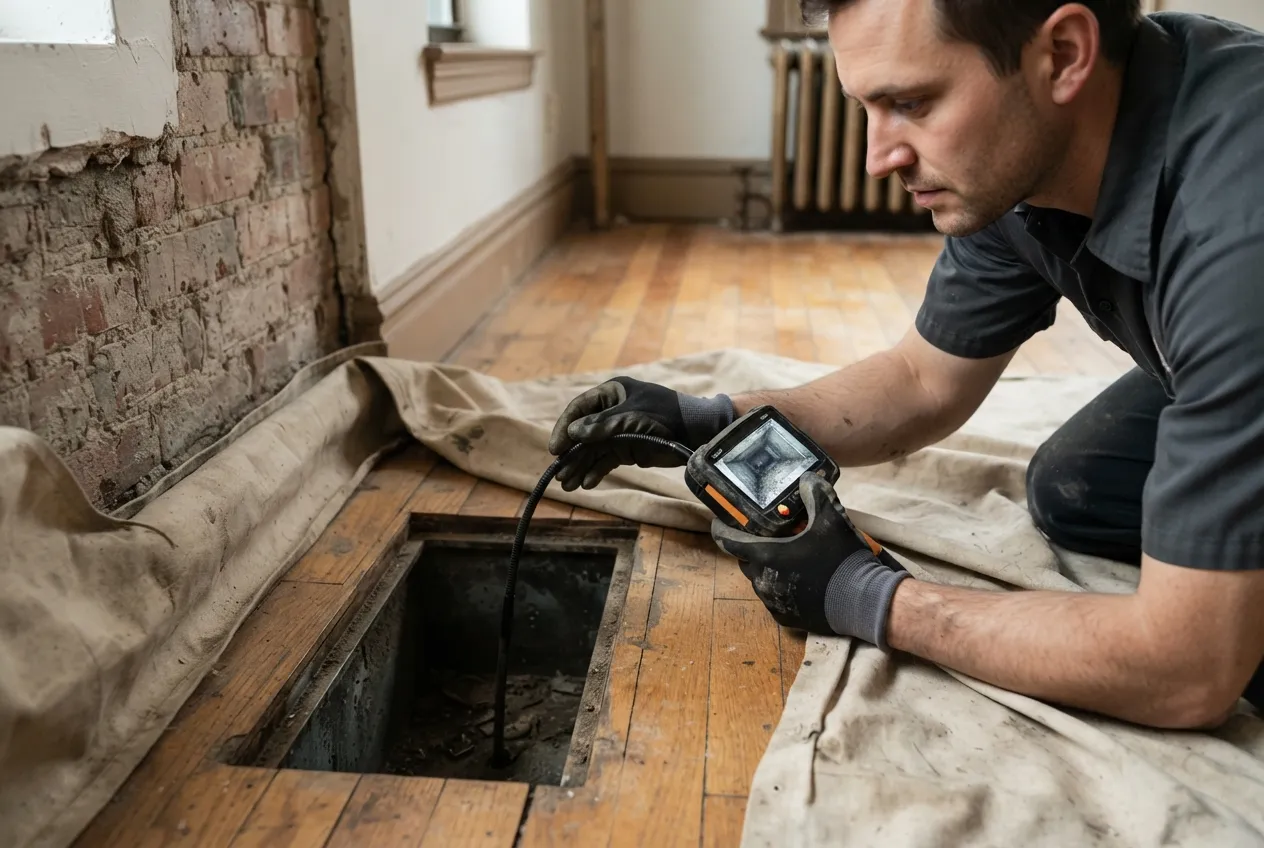
- Visual inspection of accessible ductwork, plenums, boots and register connections, with a camera for runs we can't see directly
- A record of what we found, including photos or video you can keep
- Reattaching disconnected or separated joints and resecuring loose sections with proper fasteners and hangers
- Replacing crushed, torn or kinked sections of flex duct, and repairing damaged sheet-metal sections where practical
- Sealing seams, joints and connections with duct mastic or foil tape made for ductwork, not cloth duct tape
- Sealing gaps between register boots and the ceiling, wall or floor around them
- Checking airflow at the registers before and after the work
- Cleanup of the work area and a walk-through of the results with you
How we work inside your home or apartment
Most of our work happens in finished living spaces, occupied apartments and tight basements. Protecting your home matters as much as the repair itself.
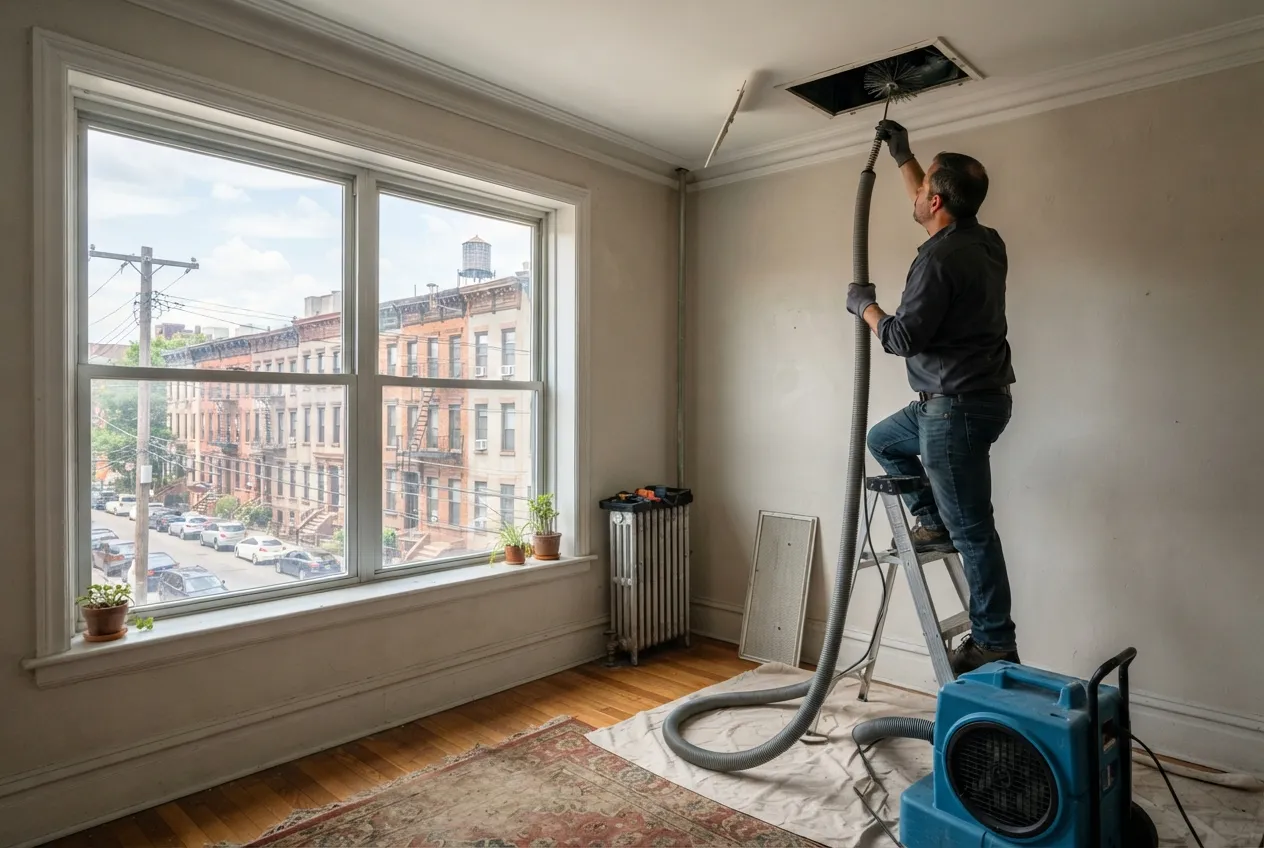
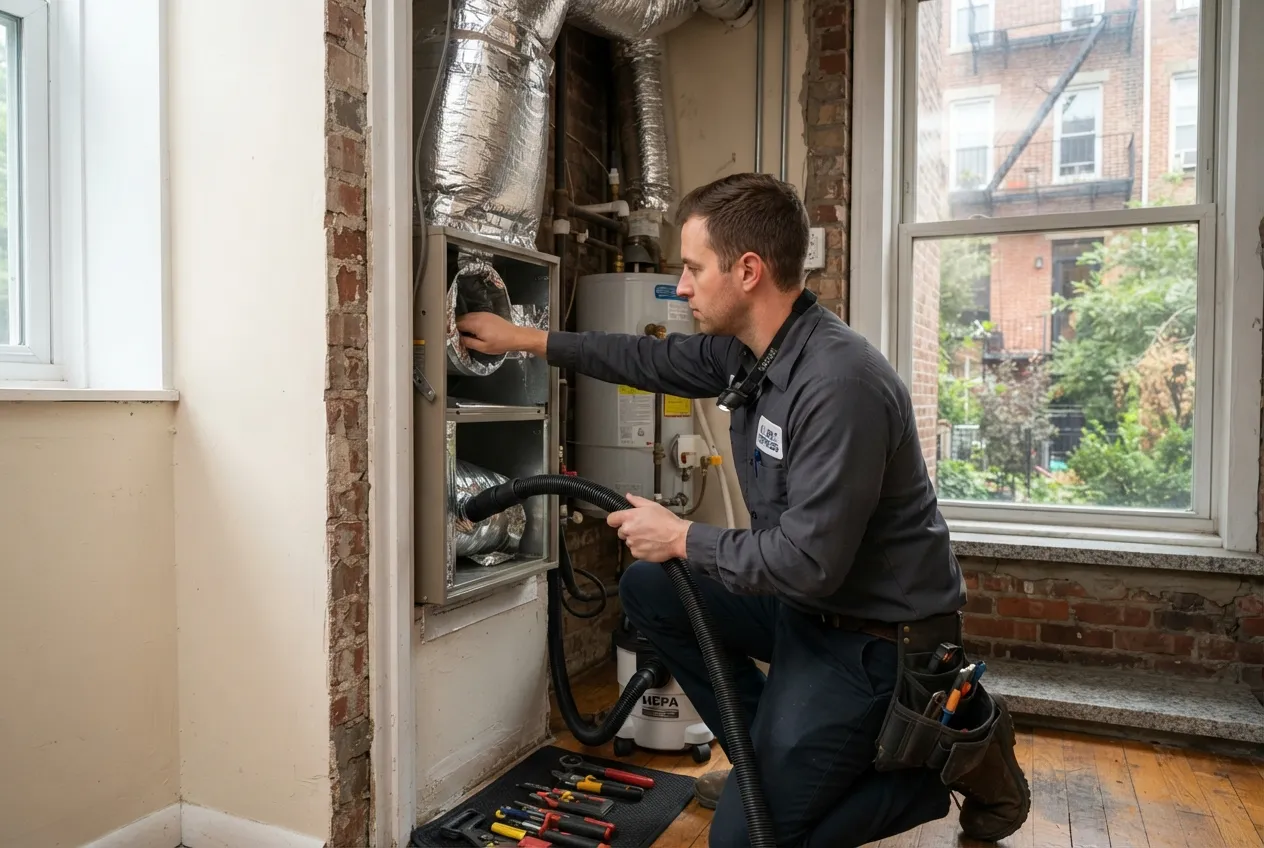
Before we start, the crew lays drop cloths along the path from the door to each work area and around every register we open. We cover and seal the registers in rooms we aren't working in so dust can't be pushed out of them. When a section needs debris cleared before sealing, we connect a HEPA-filtered vacuum to the system and put the ducts under negative pressure. That pulls loose material toward the collection unit instead of into your rooms. Rotary brushes and air whips loosen material stuck to the duct walls so the vacuum can capture it.
We use an inspection camera to look inside runs hidden behind walls and ceilings, and to confirm a repair afterward. In apartments and condos, we follow the building's rules for access hours, elevator use and work in common areas. We only open a ceiling or wall with your approval.
We don't spray chemicals as a routine step. If there's a specific reason, such as a lingering odor, evidence of pests or visible growth, we discuss it with you first. We only use products registered for that use and apply them according to the label. We don't claim that any treatment kills germs or improves health.
Ready for cleaner ducts?
What affects the price
We quote after we've seen the system, because the same symptom can mean a quick fix or a full day of work. The main factors are:
If a repair calls for opening a finished ceiling or wall, we tell you before we cut and explain what patching it will involve.
- The number of supply and return vents on the system
- Total duct length and how easy it is to reach. Open basement trunk lines are quicker than ducts in finished ceilings, attics or chases
- The condition of the ductwork, including how many joints leak and how many sections need replacing
- Whether the ducts need cleaning before they can be sealed
- Building type: a single-family house, a townhouse, or an apartment or condo with access rules and limited work hours
How a visit works
A typical visit runs in this order:
Most single-family homes and apartments are finished in one visit. Larger systems, or jobs that need parts or ceiling access, may take a second trip.
- When you book, you tell us which rooms are affected, what you've noticed and where the equipment and ductwork are located.
- The technicians arrive, lay drop cloths, seal off registers and check airflow at each vent.
- We inspect the accessible ductwork, use the camera where needed and show you what we found.
- You approve the scope and price before any repair work begins.
- We make the repairs, seal the joints and boots, and clean any sections that need it.
- We recheck airflow, clean up, remove the protection and walk you through the before-and-after photos.