The short answer
HVAC system cleaning makes sense when you see heavy dust coming from the vents, renovation debris, pests or visible growth in the ducts. It isn't something you need on a fixed schedule. ClearPath cleans the ducts, registers, blower and accessible coil under HEPA negative pressure, protects your home while we work, and bases the quote on vent count, access, condition and building type.
Your heating and cooling system moves the same air through your home many times a day. Over months and years, the ductwork, registers, blower and coil collect dust, construction debris, pet hair and sometimes nesting material from pests. ClearPath Duct Cleaning cleans the whole forced-air system, not just the vent covers you can see. We serve houses, townhouses and apartments in New York and nearby neighborhoods. This page covers the signs that cleaning makes sense, exactly what our crew does, how we protect your home while we work, and what affects the cost. We'll also tell you plainly when you probably don't need a cleaning.
Signs you need it
Not every system needs regular cleaning. The U.S. EPA recommends cleaning air ducts when there is substantial visible mold growth, vermin, or excessive dust and debris. These are the problems homeowners usually notice first:
If none of these apply and you change your filters regularly, you may not need a cleaning yet. We would rather tell you that than sell you a service you don't need.
- Dust puffs out of the supply registers when the heat or air conditioning turns on, or it settles on furniture soon after you dust.
- You renovated (sanding, demolition or drywall work) and the dust got into open registers or returns.
- You can see debris, droppings, nesting material or insects inside the ducts or behind a register cover.
- A musty smell comes from the vents when the system runs, or you can see growth on registers, the coil or inside the ductwork.
- A burnt or dusty smell lingers well past the first heating cycle of the season.
- Some rooms get weak airflow even though the system is running and the filter is new.
What's included in an HVAC system cleaning
An HVAC system cleaning covers the parts that air actually passes through. Before we start, we walk through the system with you and confirm which parts we can reach in your home. A standard visit includes:
Sanitizing is not part of a standard cleaning. We apply a product only when there is a specific reason, such as a lingering odor, evidence of pests or visible growth. When we do, we use only products registered for that use in HVAC systems. The EPA advises caution with chemical treatments in ducts, and we agree. Before we use a product, we explain what it is meant to do, and we don't claim it does more than that.
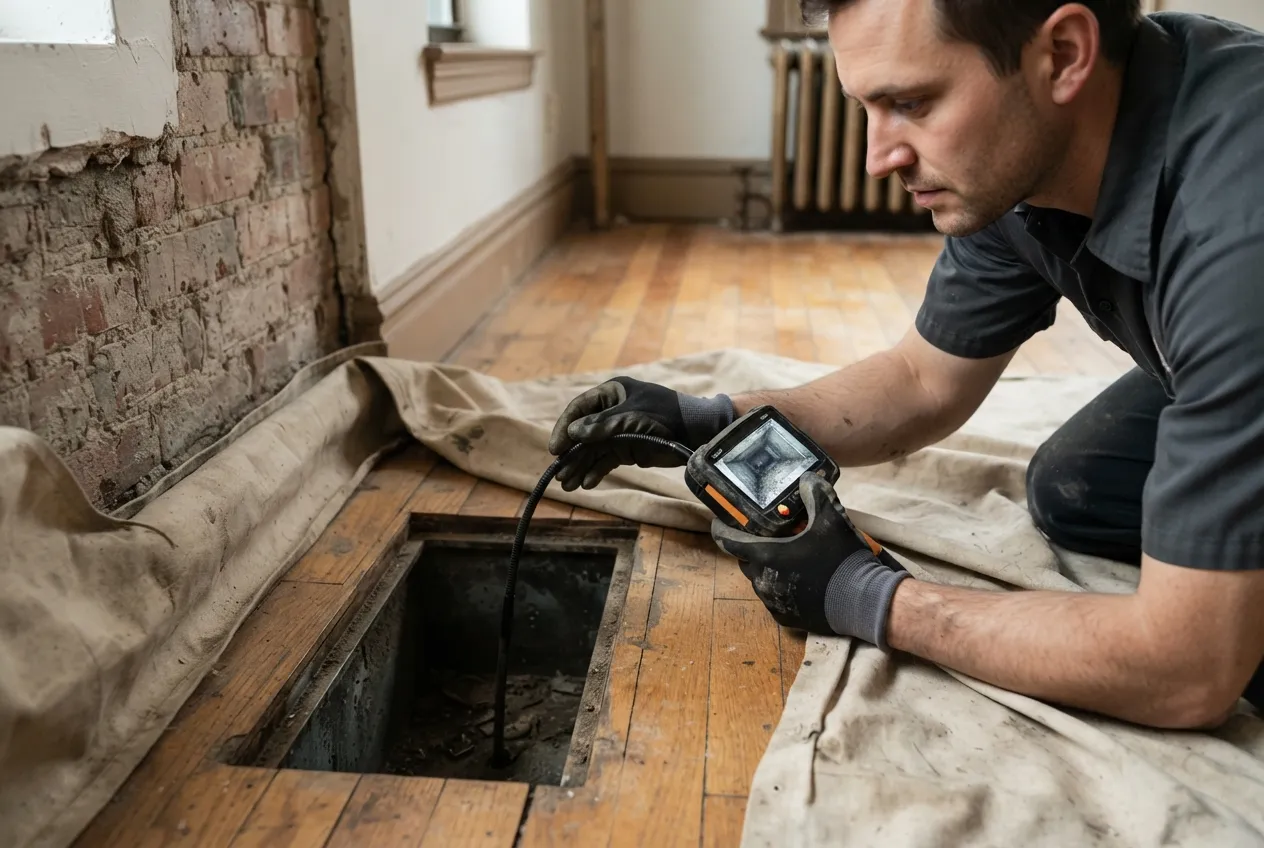
- Inspection of the supply and return ductwork, with a camera in runs we can't see directly
- Cleaning of every accessible supply and return duct run
- Removal, washing and reinstallation of register and grille covers
- Cleaning of the supply and return plenums
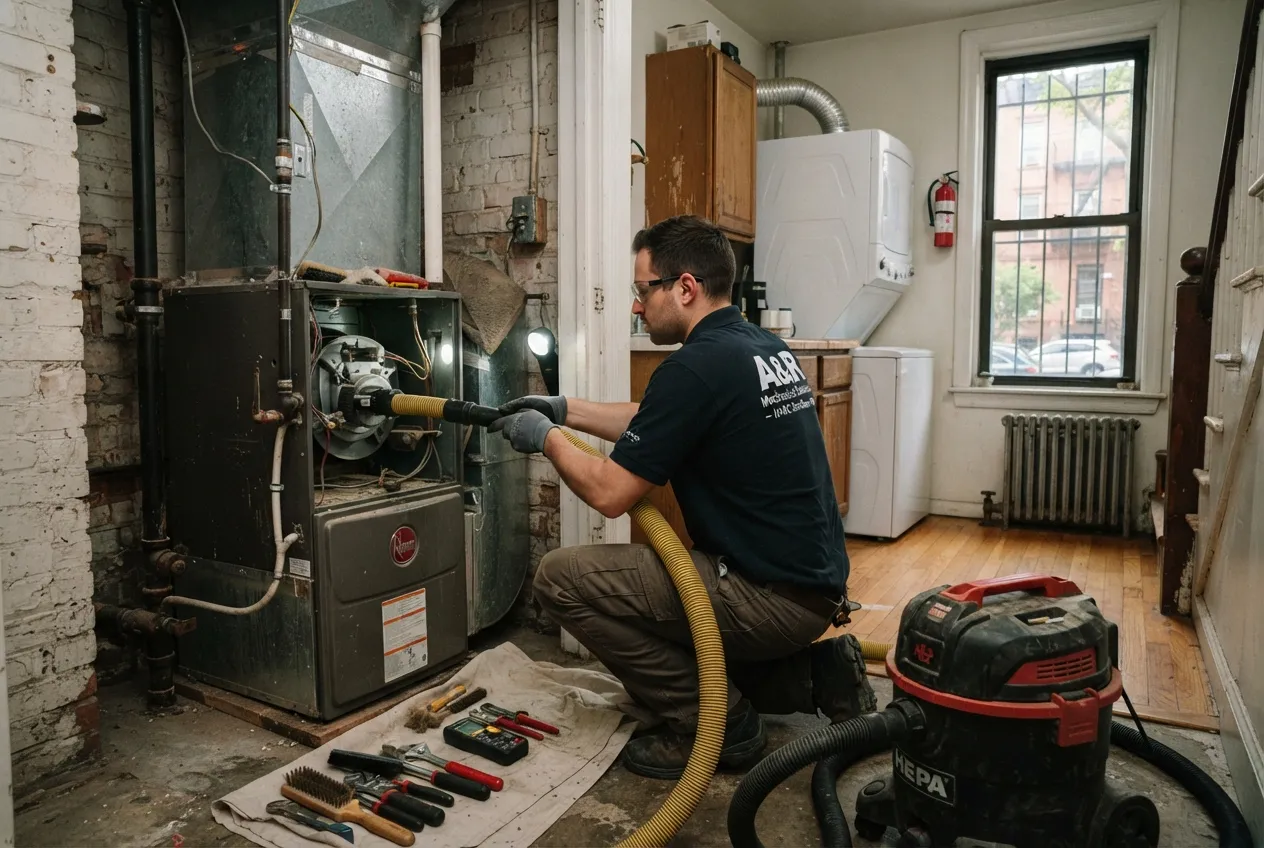
- Cleaning of the blower assembly and blower compartment where it can be safely reached
- Cleaning of the evaporator coil surface where it can be reached without major disassembly
- A new filter installed, either one you supply or one we provide
- Before-and-after photos and a short written note on what we found
How our crew works inside your home or apartment
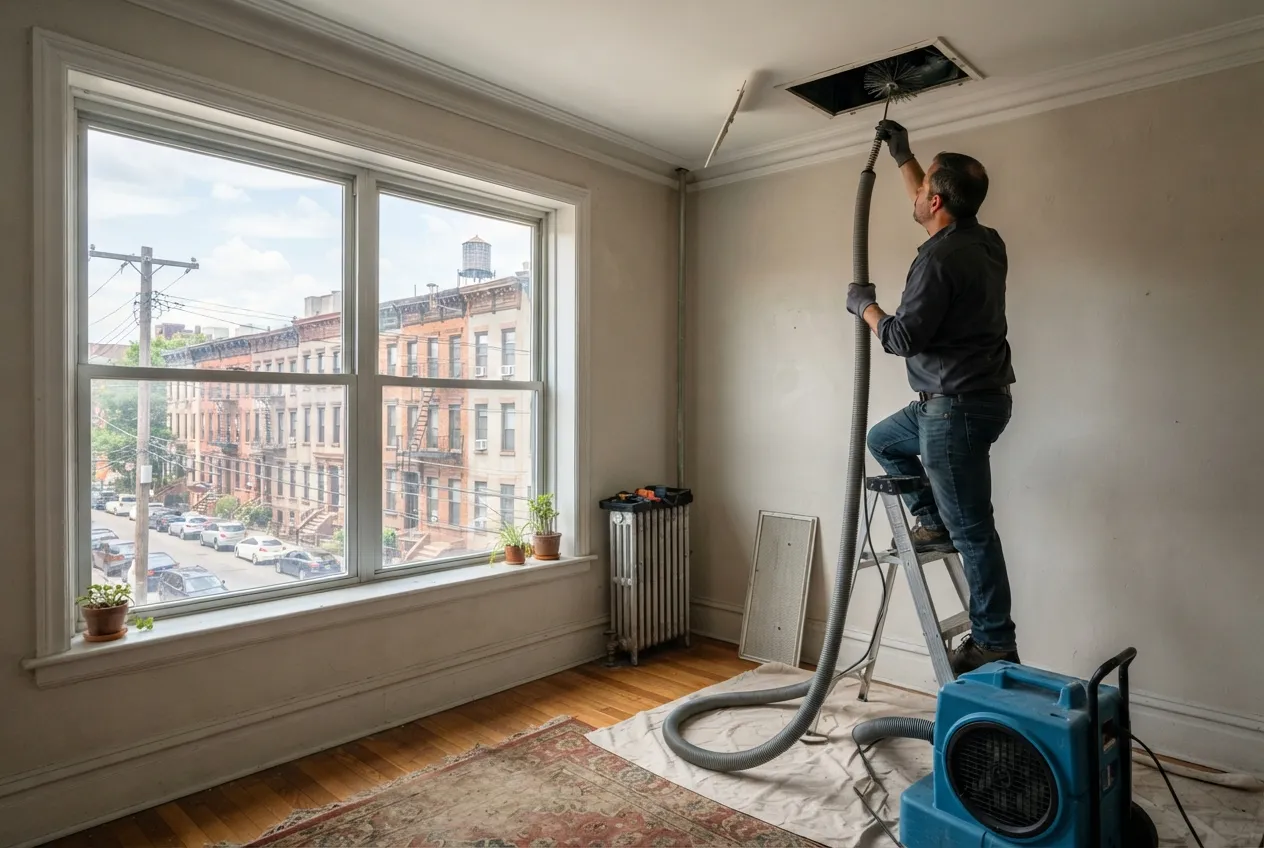
We set up before we disturb anything. Drop cloths go down along the path from your door to the equipment and under every register we'll work on. With your OK, we cover furniture near the vents or move it.
Next, we seal the supply registers and return grilles and connect a HEPA-filtered vacuum to the duct system. The vacuum puts the ductwork under negative pressure, so loosened dust is pulled toward the collector instead of blowing into your rooms.
While the system is under suction, our certified technicians feed rotary brushes and air whips through each run. They work from the registers back toward the main trunk. Brushes scrub dust and debris off the duct walls. Air whips knock debris loose in bends and in flexible duct, where a brush could cause damage. We open one register at a time, clean that run and reseal it, so the rest of the system stays under negative pressure. Where we can't see into a run, a camera shows us what is there before and after.
In apartments, we follow your building's rules on elevator reservations, work hours and hallway protection, and we keep our equipment inside your unit or in an approved space. In many apartment buildings, the central supply and exhaust risers belong to the building rather than the unit. We clean what serves your apartment and tell you if something beyond it needs the building's attention.
Ready for cleaner ducts?
What affects the price
No two homes are set up the same way, so we quote after we know your system. The main factors are:
You get a clear quote before any work begins. Be careful with very cheap duct cleaning ads. The EPA specifically warns consumers to research the process before responding to those offers, which often come with an upsell once the crew is inside.
- The number of supply and return vents
- Total duct length and how easy the runs are to reach, for example an open basement compared with ducts boxed in behind finished ceilings or in a tight attic
- The system's condition: heavy renovation debris, pest material or visible growth takes more time than routine dust
- Building type: a single-family house, a townhouse, or an apartment with building access rules
- Whether the blower and coil need extra work, or whether a sanitizing product is called for
How a visit works
First, we ask a few questions about your home: what type of home it is, roughly how many vents it has, where the air handler sits and what you've noticed. Based on your answers, we give you an estimate and schedule a visit.
When the crew arrives, they walk through the system with you and confirm the scope and quote before any work starts. If the inspection shows your ducts don't need cleaning, we'll tell you.
Most of the visit is setup, cleaning and cleanup. A typical single-family home takes several hours. Larger systems, and systems that are harder to reach, can take longer. Before we leave, we reinstall everything, run the system to check airflow at each register and vacuum the work area. Then we walk you through the photos and anything else we noticed, such as loose duct connections, crushed flexible duct, or a filter slot that lets air bypass the filter.
New York City's heat season runs from October 1 through May 31. For that reason, many owners schedule a cleaning in late spring or early fall, when the system can be off for a few hours without much trouble.
HVAC System Cleaning by city
- HVAC System Cleaning in Upper East Side
- HVAC System Cleaning in Carnegie Hill
- HVAC System Cleaning in Yorkville
- HVAC System Cleaning in Lenox Hill
- HVAC System Cleaning in Roosevelt Island
- HVAC System Cleaning in Old Astoria
- HVAC System Cleaning in Upper West Side
- HVAC System Cleaning in Hallets Point
- HVAC System Cleaning in East Midtown
- HVAC System Cleaning in Turtle Bay
- HVAC System Cleaning in Lincoln Square
- HVAC System Cleaning in Queensbridge