The short answer
A chimney sweep removes soot, creosote and debris from your flue and gives a technician a clear look at its condition. The NFPA 211 standard calls for chimneys, fireplaces and vents to be inspected once a year. For Carnegie Hill's older masonry chimneys, having the work done before the first fire of the season is the simplest way to start the season with a clean, inspected flue.
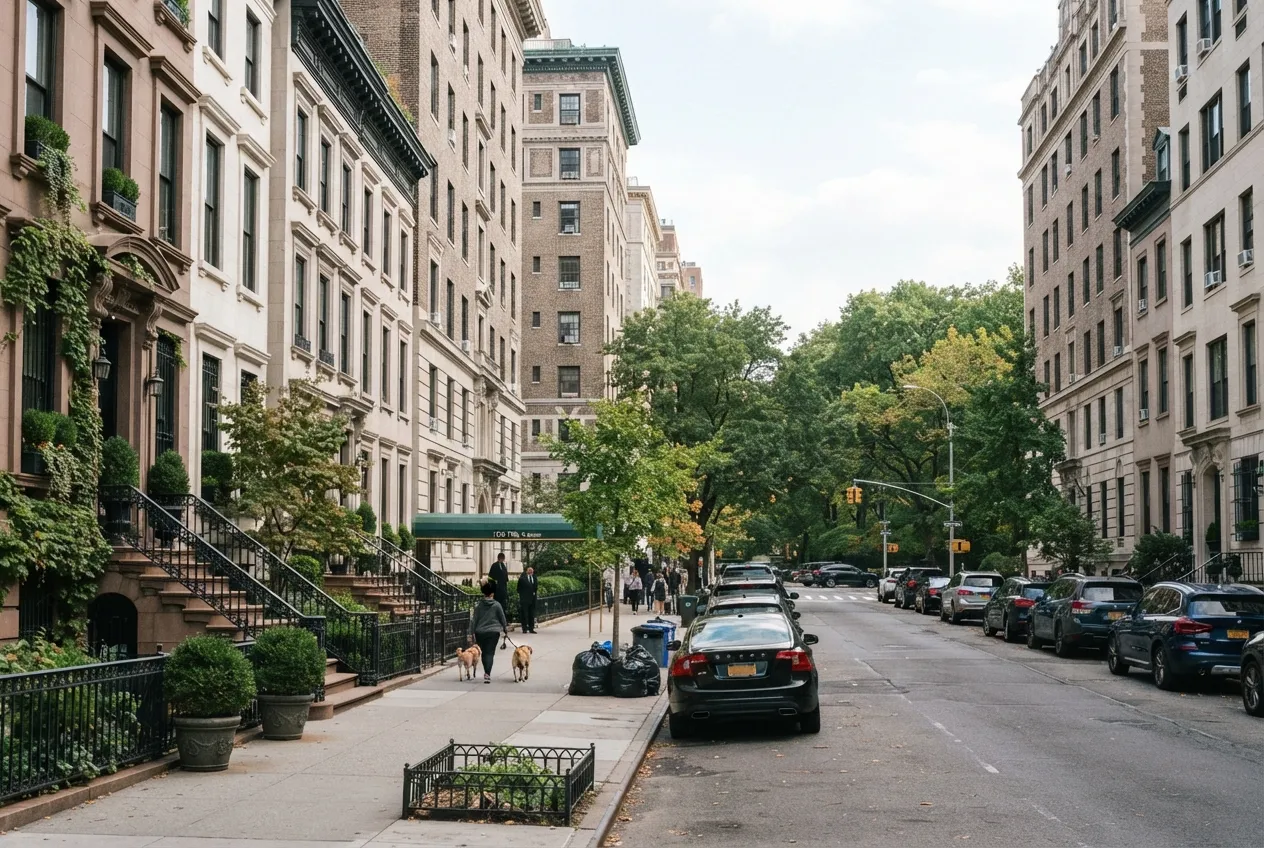
Carnegie Hill's brownstones, rowhouses and pre-war apartment buildings were built when fireplaces were a main source of heat. Many of those chimneys are still in use for wood fires, for gas logs, or as the flue for a building's boiler. ClearPath Duct Cleaning's certified technicians work from our office at 201 E 79th St, so Carnegie Hill is close to home for us. This page explains what a chimney sweep involves here, what we look for in older masonry flues, and how to time the work around the heating season.
What a Chimney Sweep Includes
A sweep removes the soot, creosote and debris that build up inside a flue, and it gives the technician a clear look at the condition of the chimney. In a Carnegie Hill home, that usually means working from the fireplace opening and, where access allows, from the roof.
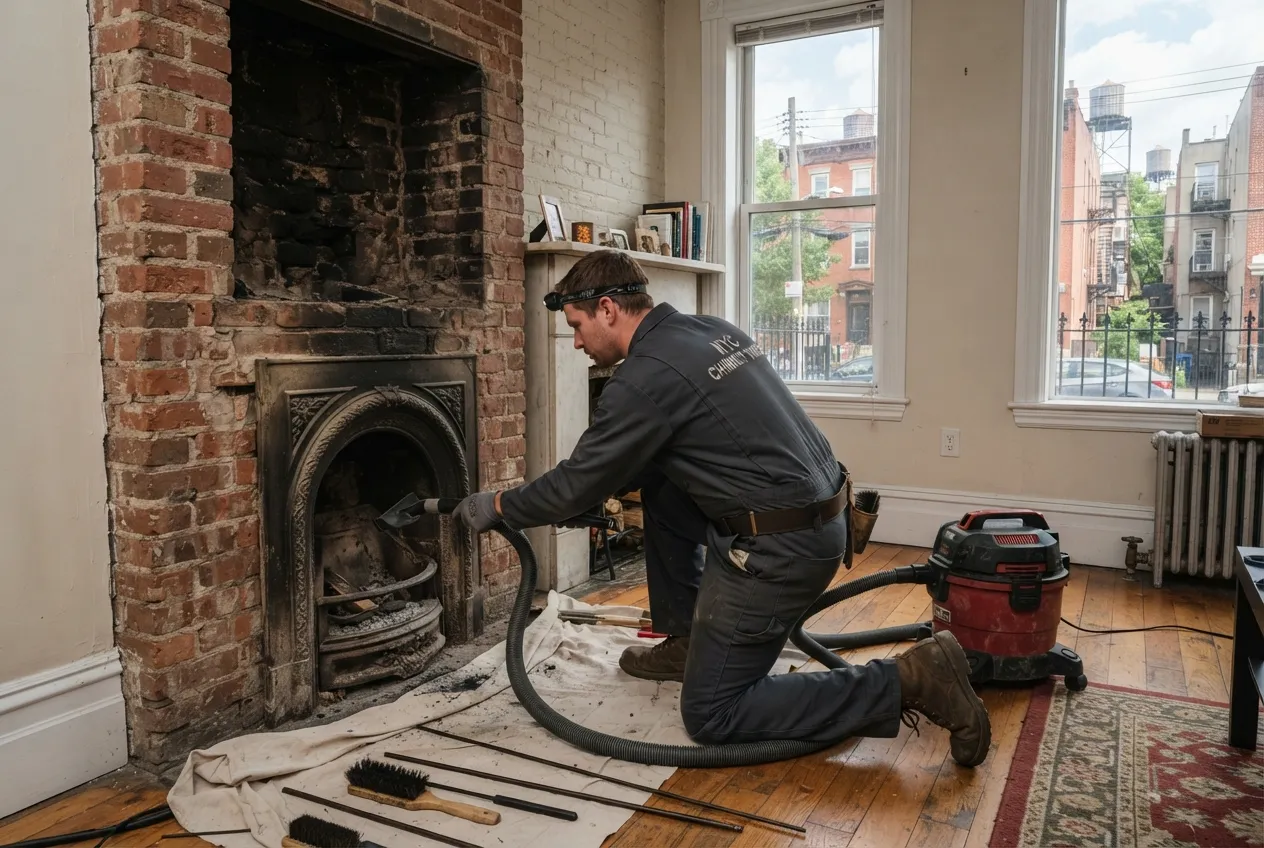
We protect your floors and furnishings before we start, because soot spreads easily in rooms with plaster walls, wood floors and rugs. A typical visit covers:
- Covering the hearth and surrounding floor, and using containment to keep soot out of the room
- Brushing the flue and smoke chamber to remove creosote and soot
- Clearing nests, leaves and debris from the firebox, smoke shelf and damper area
- Checking that the damper opens, closes and seals
- Looking at the firebox, flue liner and chimney crown or cap for cracks, gaps or missing pieces
- Walking you through what we found, including anything that needs a closer look
Chimneys in Brownstones and Pre-War Buildings
Many chimneys in this part of Manhattan are original brick or masonry. Over decades, mortar joints wear, clay flue tiles crack, and some flues were never lined at all. A house may have several fireplaces feeding into one chimney stack, each with its own flue. It is common to find one that has been closed off, one that is used regularly and one that has been converted to gas logs.
In apartment buildings, a fireplace in a unit often connects to a flue that runs through several floors. We focus on the flue serving your fireplace. If we see something that involves the building's shared structure, we tell you, so you can raise it with your building's management or board.
Wood fires leave creosote, a tar-like residue that can ignite if it builds up. Gas fireplaces burn cleaner but still need attention, because vents can be blocked by debris and caps and liners can deteriorate.
Why a Yearly Inspection Matters
The NFPA 211 standard calls for chimneys, fireplaces and vents to be inspected once a year, whether or not you think they need cleaning. Chimney professionals use three inspection levels:
Most Carnegie Hill homeowners who use their fireplaces regularly need a Level 1 inspection along with a sweep. If you are buying or selling a brownstone or co-op with a working fireplace, a Level 2 inspection gives a clearer picture of the chimney's condition.
- Level 1: for a chimney in regular use when nothing about the system has changed
- Level 2: when something changes, such as a new appliance or a switch of fuel, or when the home is sold
- Level 3: when a suspected hidden hazard can only be reached by opening part of the chimney or the building
Ready for cleaner ducts?
Oil-to-Gas Conversions and Flue Liners
When a New York City building converts its boiler from oil to gas, the chimney has to be evaluated as part of the work. A new liner is often needed, because gas exhaust produces acidic condensate that can corrode a masonry flue.
If your townhouse or building is planning a conversion, or has already gone through one, we can inspect the chimney and explain what we see in the flue. That way, you and your contractor can plan the next step.
Timing Your Sweep Around Heat Season
New York City's heat season runs from October 1 through May 31, when building owners must keep apartments heated to the city's minimum temperatures. For buildings whose boilers vent through a chimney, it makes sense to have the flue checked before October, when the system will run every day.
For fireplaces, late summer and early fall are the easiest times to schedule. Having the work done before your first fire means you start the season with a clean, inspected flue. Spring, after your last fire, is also a good time to catch problems before they sit all summer.
Along with Carnegie Hill, our technicians serve the Upper East Side, Yorkville, Lenox Hill, Roosevelt Island and the Upper West Side.
More services in Carnegie Hill
- Air Duct Cleaning in Carnegie Hill
- Dryer Vent Cleaning in Carnegie Hill
- HVAC System Cleaning in Carnegie Hill
- Duct Sanitizing & Odor Removal in Carnegie Hill