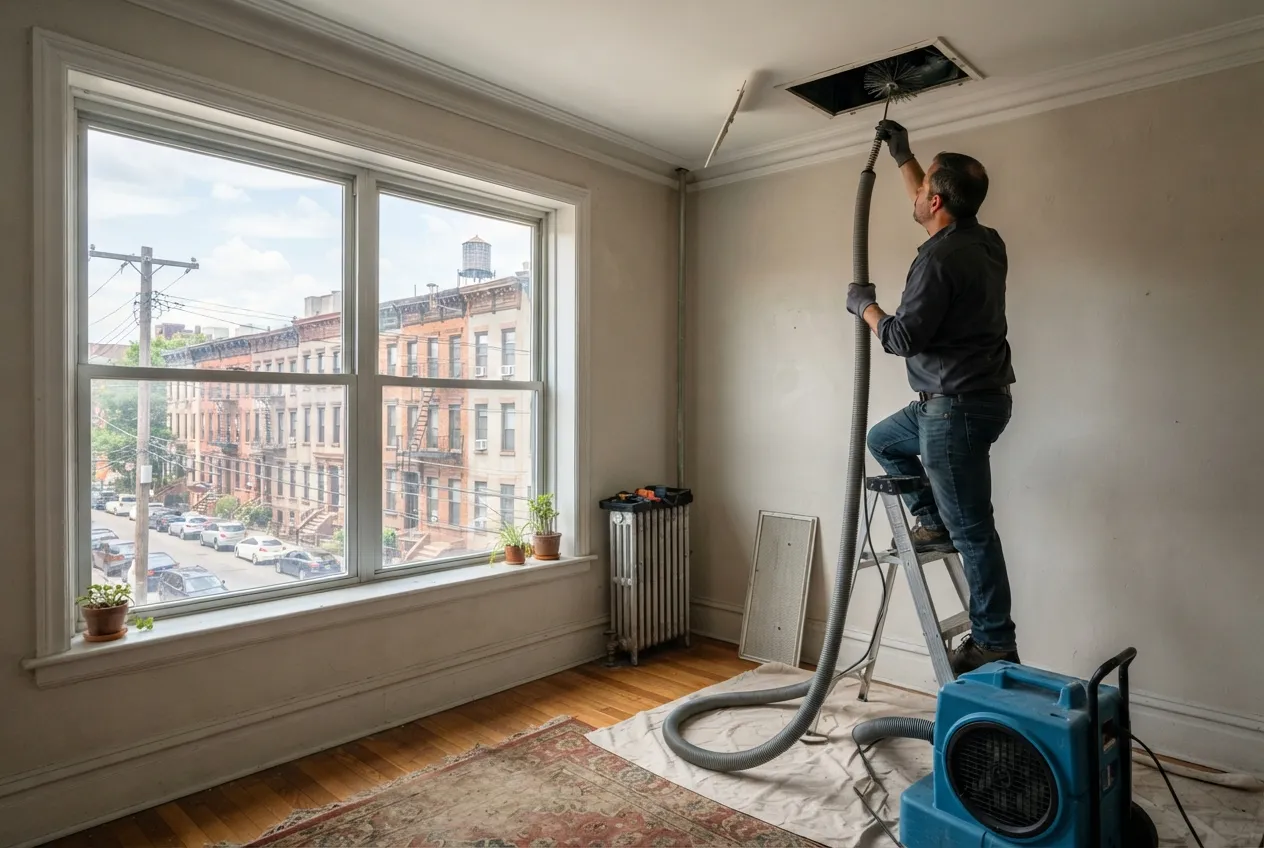

The short answer
Most duct odors come from something physically in the system, such as moisture and mold, trapped dust, pest debris or old residue. We locate and remove that source first, then apply a sanitizing treatment only when it is actually warranted. Spraying a product over a dirty duct just masks the smell for a while.
If a musty, stale or smoky smell comes out of your vents every time the system turns on, the ductwork is often where it starts. ClearPath Duct Cleaning handles duct sanitizing and odor removal for homes in Hallets Point, about a mile east of our Upper East Side office. Our certified technicians find the source of the smell first, clean it out, and only then decide with you whether a sanitizing treatment makes sense. We work in the neighborhood's rowhouses, multi-family homes and apartment buildings, where duct runs tend to be short, tight and tucked into closets, soffits and ceilings.
Where Vent Odors Usually Come From in Hallets Point Homes
A smell from the vents is a clue, not a diagnosis. In a neighborhood close to the water, humid summers keep air conditioning running for long stretches. Condensation around coils and drain pans can feed mold growth that you smell more than you see. In older rowhouses and converted multi-family homes, ductwork has often been patched or extended over the years, leaving dead ends and seams where dust and debris settle.
These are the sources we check most often:
- Damp or moldy drain pans, coils and nearby duct liner after cooling season
- Heavy dust buildup that gives off a burnt smell when the heat first comes on
- Nesting material, droppings or remains from mice, insects or birds
- Smoke, cooking grease or pet odor absorbed into dust inside the ducts
- Leftover drywall and construction dust from a renovation
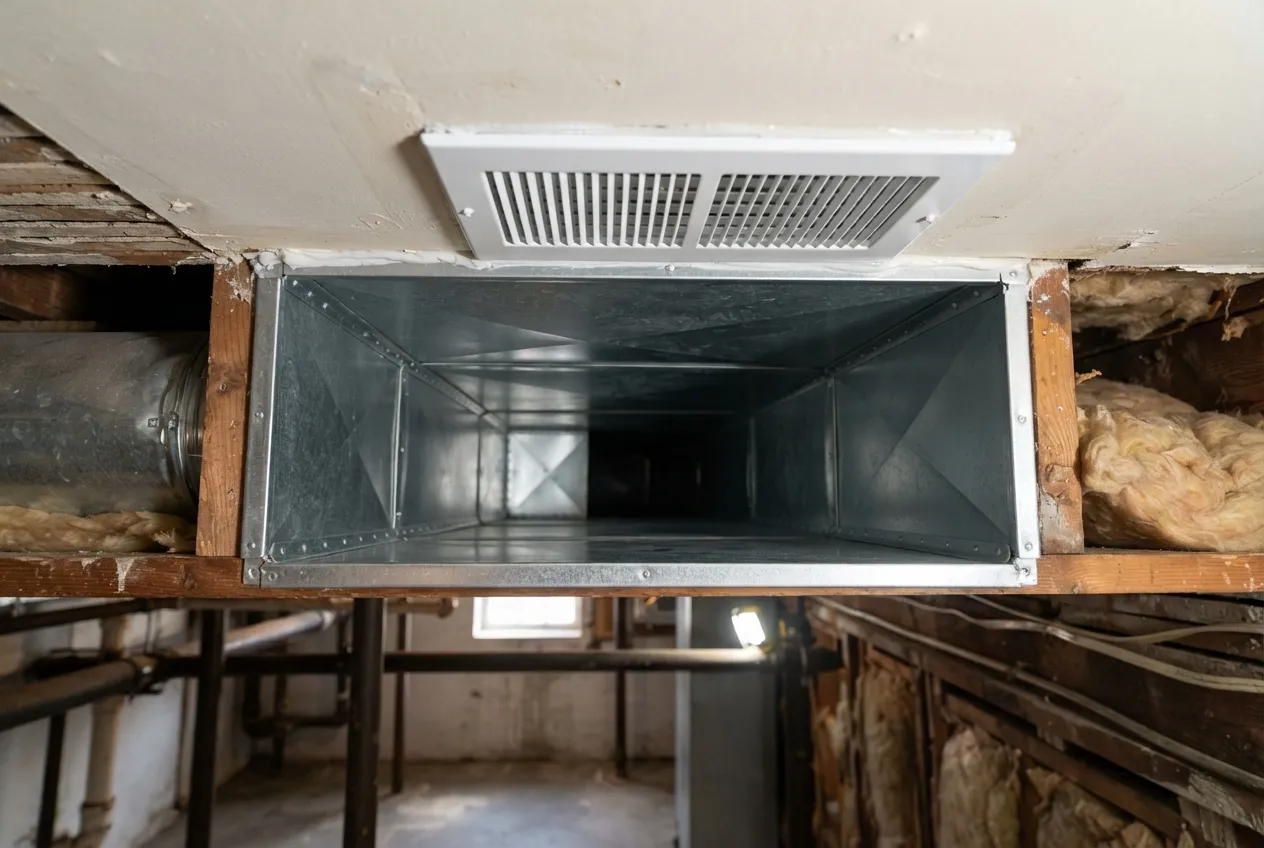
Clean First, Sanitize Second
The U.S. EPA advises cleaning air ducts when there is substantial visible mold growth, vermin, or excessive dust and debris. That is the standard we use. If none of those are present, we will tell you so, and we will look elsewhere for the smell, such as a drain line, a dryer vent or a bathroom exhaust fan.
When the ducts do need work, we clean them before anything is applied. A sanitizer cannot neutralize odor coming from a layer of debris it never reaches. The EPA also urges care with chemical treatments in ductwork, so we explain what product we would use, why, and where. If cleaning alone solves the problem, we stop there. The EPA also notes that duct cleaning has not been shown to prevent health problems, so we present this service as a way to remove odor and debris, not as a medical fix.
What a Visit Looks Like
Most visits follow the same order. We adjust the details to fit the space, since a narrow walk-up and a newer high-rise unit present very different access problems.
- Walk-through: we ask when the smell appears, which rooms are affected, and whether it changes between heating and cooling
- Inspection: we open registers and access points and look inside the ducts and at the air handler, coil area and drain pan
- Source removal: we vacuum under negative pressure and agitate the debris loose from duct walls
- Targeted treatment: only if warranted, we apply a sanitizer to the cleaned areas and tell you which product it is
- Wrap-up: we show you what we found and what to watch for, such as a clogged condensate line
Ready for cleaner ducts?
Timing Around New York City's Heat Season
New York City's heat season runs from October 1 through May 31, when building owners must keep apartments heated to the city's minimum temperatures. For many Hallets Point residents, that means the heat starts in the fall, and any dust that settled over the summer starts to smell. Late spring and early fall are the easiest times to schedule odor work. The system can be shut down briefly without leaving anyone cold or overheated, and you go into the next season with clean ducts.
Apartments, Rowhouses and the Dryer Vent
In apartment buildings, some ventilation belongs to the building, not to the unit. We clean what serves your home and let you know when the source looks like a shared system that management needs to address. In rowhouses and detached homes, we can usually follow the ductwork from end to end.
We also check the dryer vent, because a lint-packed vent can push a hot, burnt smell back into the house. According to the U.S. Fire Administration, failure to clean is the leading factor contributing to clothes dryer fires in homes, so a dryer vent cleaning is worth adding to an odor visit.
More services in Hallets Point
- Air Duct Cleaning in Hallets Point
- Dryer Vent Cleaning in Hallets Point
- HVAC System Cleaning in Hallets Point
- Chimney Sweep in Hallets Point