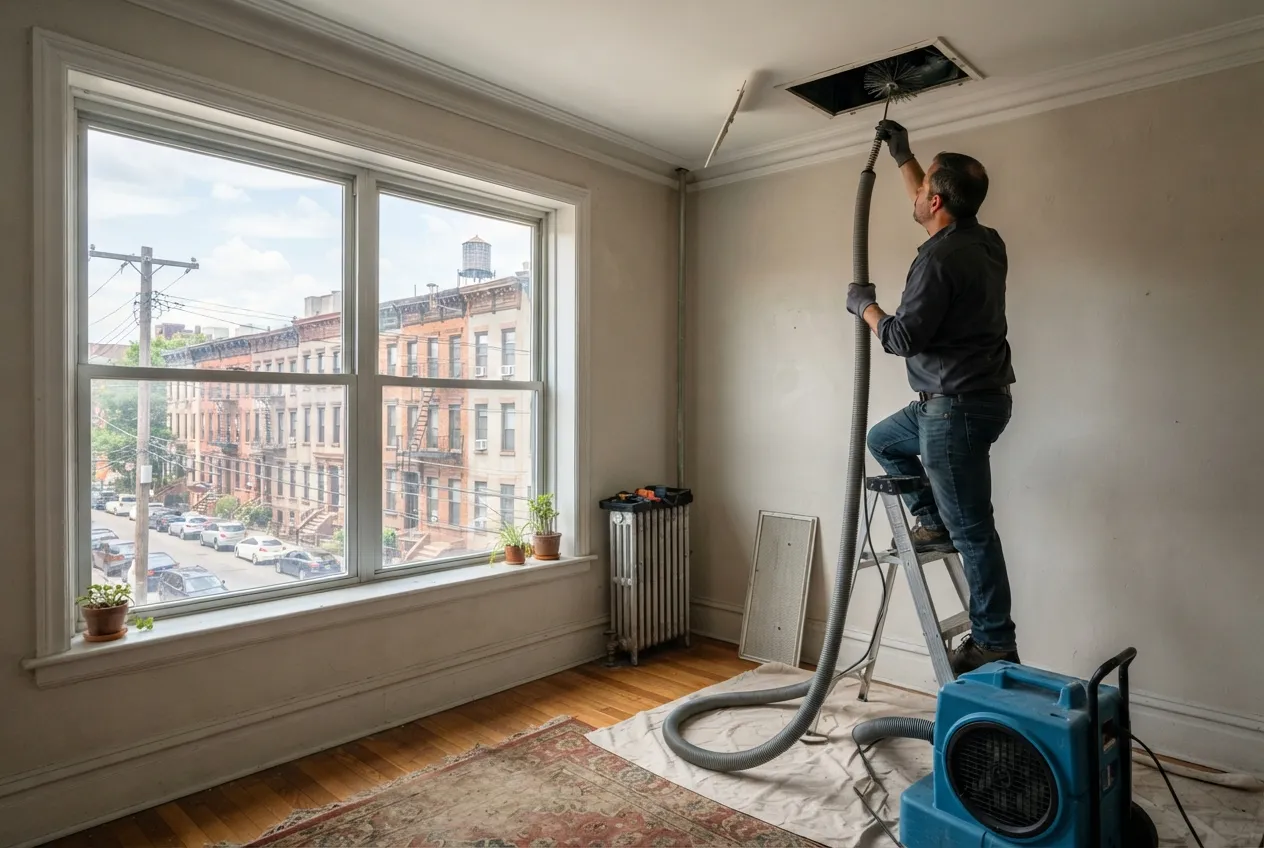

The short answer
Duct odors in Lincoln Square homes usually come from moisture, mold, debris, pet dander or pests in the duct system, and the fix is to find and remove that source. We inspect, clean the ducts and damp components, and use a sanitizing treatment only when there's a clear reason and you approve it.
A musty smell, a lingering pet or smoke odor, or a stale whiff every time the air handler turns on: these are the usual reasons Lincoln Square residents ask us about duct sanitizing and odor removal. Our certified technicians come from our Upper East Side office, about 2 miles east, to homes in ZIP codes 10023 and 10069. We start by finding where the odor actually comes from and clean the ductwork if it needs it. Only then do we discuss whether a sanitizing treatment would add anything. Often the cleaning and fixing the source do most of the work.
When Sanitizing Is Worth It, and When It Isn't
The U.S. Environmental Protection Agency recommends cleaning air ducts when there is substantial visible mold growth, signs of vermin, or excessive dust and debris. Those are the same conditions that tend to cause odors, so that's where we focus. The EPA also notes that duct cleaning hasn't been shown to prevent health problems, and we won't tell you otherwise. What cleaning can do is remove the material that is producing a smell.
Sometimes your ducts are fairly clean and the odor is coming from somewhere else, such as a drain, a damp closet or a neighboring unit. In that case, sanitizing the ducts won't fix it. We'll tell you that during the inspection rather than sell you a treatment you don't need.
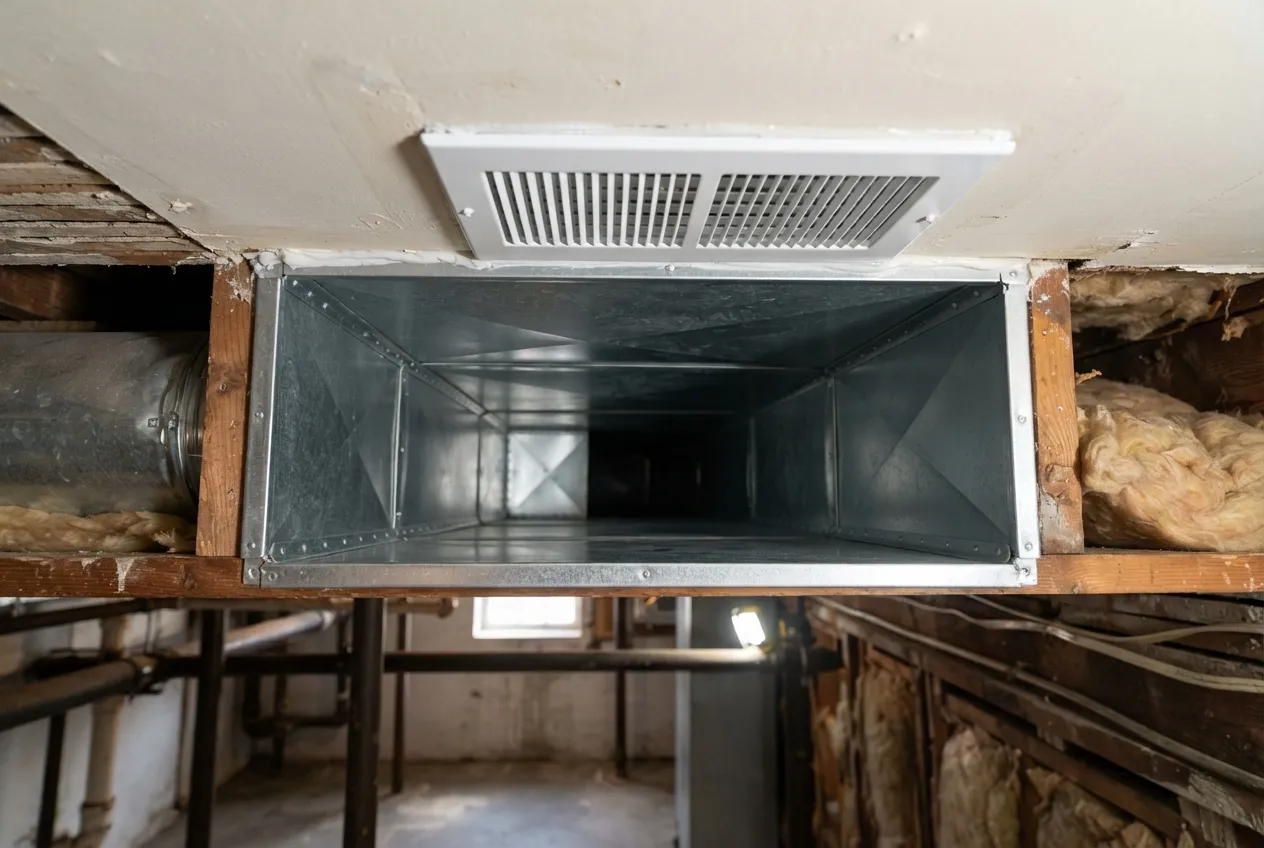
Where Odors Come From in Lincoln Square Homes
Housing in the neighborhood ranges from pre-war apartment buildings and brownstones to newer high-rise condos and co-ops. Each type has its own common odor sources:
- Pre-war apartments with added central air or ducted mini-split systems, where condensation pans and short duct runs can stay damp and grow mildew
- Brownstones and rowhouses with ductwork running through older walls, basements or crawl spaces, where dust, moisture and rodent activity can build up
- High-rise units with fan coil or through-wall systems, where a dirty coil, a clogged drain line or wet insulation often causes musty air
- Homes after a renovation, a leak or a smoke event, where debris and residue settle in supply and return ducts
- Homes with pets, where hair and dander collect at returns and filters
How We Handle Duct Sanitizing and Odor Removal
Every visit follows the same order. Treating a duct before it's clean just puts product on top of dirt.
- Inspect: we check registers, returns, accessible duct runs, the coil and the drain pan, and use a camera where we can't see directly.
- Find the source: we note visible mold growth, droppings, standing water or heavy debris, and we show you what we find.
- Clean: we use negative-pressure equipment and agitation tools to pull debris out of the duct system, and we clean the components that hold moisture.
- Treat, if warranted: if there's a real reason, such as mold growth or contamination from pests, we discuss an appropriate treatment with you before applying anything.
- Recommend: if the odor source is outside the ducts, such as a leak, a plumbing problem or wet insulation, we tell you so you can have it repaired.
Ready for cleaner ducts?
Our Approach to Chemical Treatments
The EPA advises caution with chemical treatments in ductwork, and we agree. We don't apply sanitizers by default, and we don't use fragrance to cover up an odor. If a treatment makes sense, we explain what it is, why we'd use it and how to ventilate the space. We proceed only with your approval.
If anyone in your home has asthma, chemical sensitivities or a respiratory condition, let us know before the visit so we can plan around it.
The EPA also suggests researching any duct cleaning offer that seems unusually cheap. We encourage you to ask any company, including us, exactly what's included before you book.
Scheduling in Lincoln Square Buildings
New York City's heat season runs from October 1 through May 31. If your home shares ducts or heating equipment with the rest of the building, scheduling odor work in late spring or early fall is often easier. We work year-round, though, and can address an odor problem whenever it comes up.
Many co-ops and condos in the neighborhood require advance notice, elevator reservations or contractor paperwork. Tell us your building's requirements when you contact us, and we'll plan the visit around them. We also serve the Upper West Side, Carnegie Hill, the Upper East Side, East Midtown and Turtle Bay.
More services in Lincoln Square
- Air Duct Cleaning in Lincoln Square
- Dryer Vent Cleaning in Lincoln Square
- HVAC System Cleaning in Lincoln Square
- Chimney Sweep in Lincoln Square