
The short answer
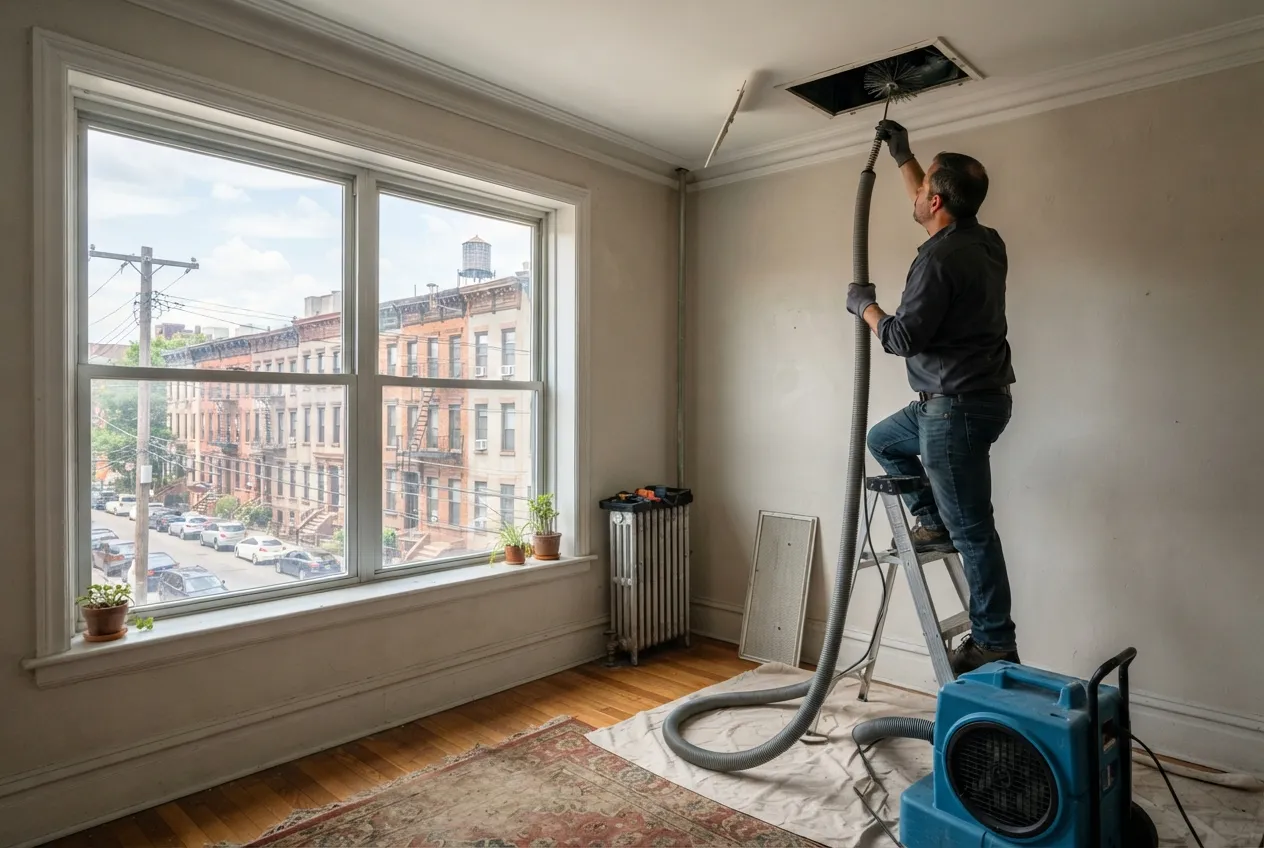
HVAC system cleaning in Old Astoria covers the ducts, registers, blower and coil area of a forced-air system, not just the vents you can see. It makes the most sense when there's visible mold, signs of pests, or heavy dust and debris. If your system doesn't need it, we'll tell you.
Old Astoria sits about a mile east of our Upper East Side office, so getting a crew to your home is a short trip. The neighborhood mixes older rowhouses and detached homes with pre-war apartment buildings and newer construction, and the heating and cooling equipment varies just as much. Some houses have forced-air furnaces. Some older homes had ducted central air added over the years. Many apartments rely on their own air handlers. Our HVAC system cleaning covers the parts of a ducted system that move air through your home: supply and return ducts, registers and grilles, the blower, and the coil area. The goal is a cleaner system and a clear picture of the condition it's in.
What HVAC Cleaning Includes in an Old Astoria Home
A full cleaning treats the system as one connected path. Dust that settles in a return duct gets pulled across the blower and coil, so cleaning only the registers rarely solves much. Our certified technicians put the duct system under negative pressure with a collection unit. They then work through the branches with brushes and air tools, so loosened debris is carried out of the system instead of being blown into your rooms.
- Supply and return ducts, including trunk lines and branch runs
- Registers, grilles and diffusers, removed and washed where possible
- Blower assembly and blower compartment
- Accessible areas around the evaporator coil and drain pan
- A check of the filter slot, with a note on filter size and fit
- A look at accessible sections before and after cleaning so you can see the difference
How Older Queens Homes Affect the Job
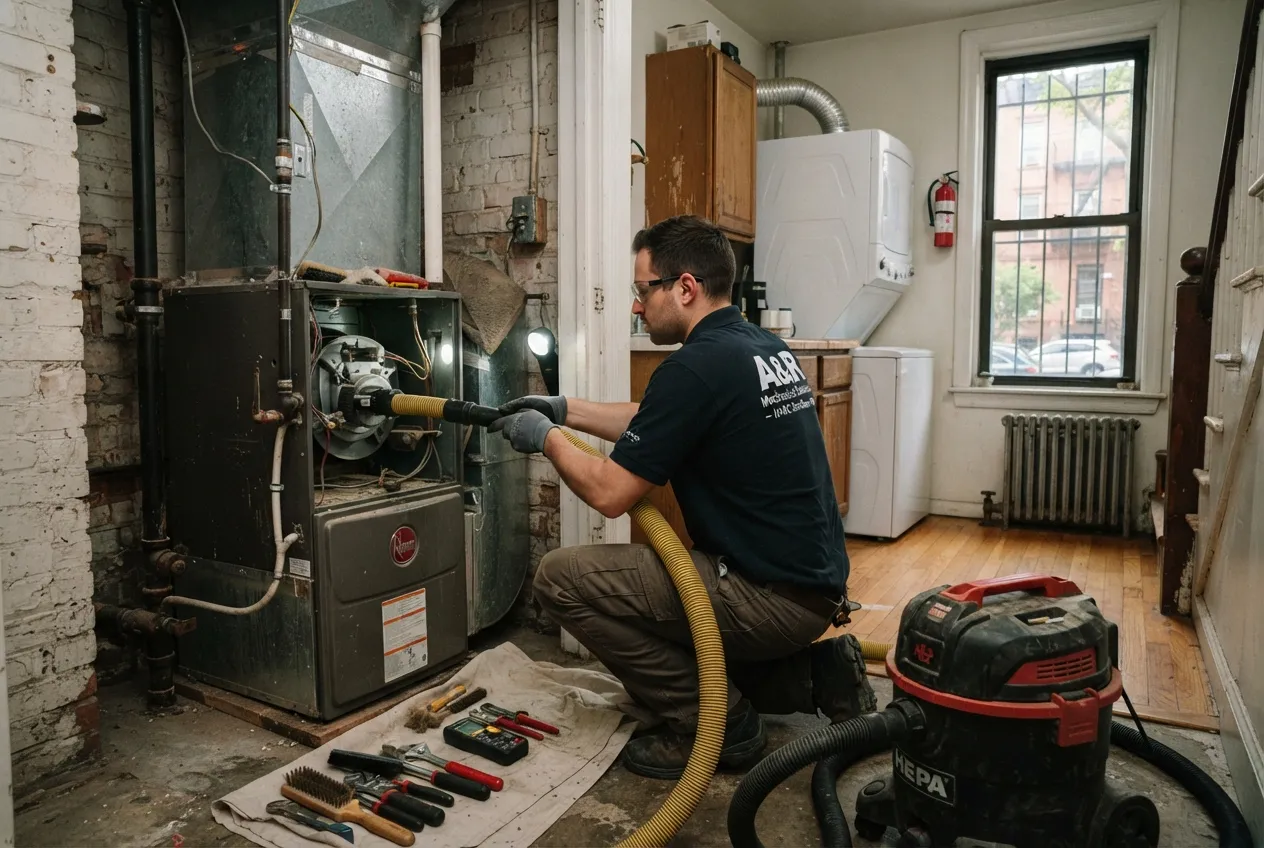
Many houses in Old Astoria were built long before central air was common. When ducts were added later, installers often fit them into closets, ceilings and basements wherever there was room. That can mean tight bends, long runs and sections that are hard to reach. Renovations leave their own traces too. Plaster dust, drywall dust and debris that fell into open registers during work can sit in a duct for years.
In rowhouses and attached homes, the equipment is often in a basement or utility closet. In some apartments, the air handler sits above a ceiling panel. We look at the layout first and explain which sections we can reach and clean well. We also point out any spots we can't reach without opening a wall or ceiling, so you know exactly what you're getting.
When Cleaning Makes Sense, and When It Doesn't
We follow the same practical guidance the U.S. Environmental Protection Agency gives homeowners. The EPA advises cleaning air ducts when there is substantial visible mold growth, signs of vermin such as rodents or insects, or excessive dust and debris. It also notes that duct cleaning has not been shown to prevent health problems, so we don't promise that it will.
The EPA also warns consumers to research the process before responding to very cheap advertised offers, and to be careful with chemical treatments. We don't apply sanitizers or coatings by default. If one might be appropriate, we explain what it is and why, and the decision is yours.
- Visible mold inside ducts or on the blower
- Droppings, nesting material or insects in the system
- Dust blowing out of registers, or dust building back up quickly after you clean
- Heavy dust left behind after a renovation
- Moving into a home where you don't know when the system was last cleaned
Ready for cleaner ducts?
Timing Around the Heating Season
New York City's heat season runs from October 1 through May 31. If your home heats with forced air, the system works hardest during those months. A cleaning before or early in the season means less settled dust gets circulated once the heat comes on. Homes with central air often schedule in spring, before cooling starts. Either timing works. What matters is not running the system for months over a mold or pest problem.
If your home also has a fireplace or a boiler that vents through a chimney, we can look at that on the same visit. The NFPA 211 standard calls for chimneys, fireplaces and vents to be inspected once a year.
Serving Old Astoria and Nearby Neighborhoods
Old Astoria is one of several neighborhoods close to our office. We also work in Hallets Point and Queensbridge in Queens, and in Yorkville, Lenox Hill and the rest of the Upper East Side in Manhattan. You might live in a detached house, a rowhouse or an apartment with its own ducted system. In each case, we ask a few questions about your equipment before the visit so the crew arrives with the right tools.
More services in Old Astoria
- Air Duct Cleaning in Old Astoria
- Dryer Vent Cleaning in Old Astoria
- Duct Sanitizing & Odor Removal in Old Astoria
- Chimney Sweep in Old Astoria