The short answer
A chimney sweep removes creosote, soot and debris from your flue and checks the chimney for damage, blockages and liner problems. For Upper West Side brownstones, rowhouses and pre-war apartments, plan on a yearly inspection, as the NFPA 211 standard calls for, with sweeping whenever buildup is found.
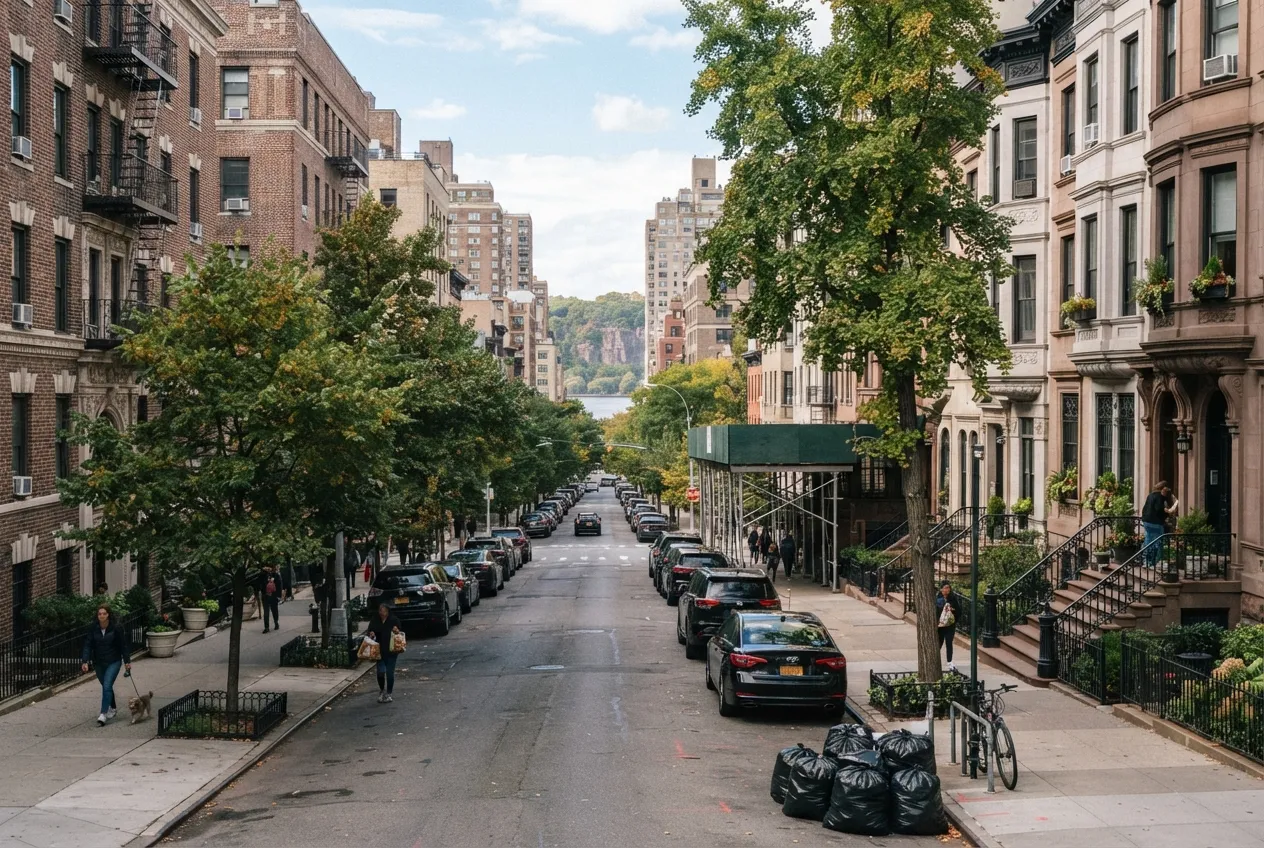
Many Upper West Side homes still have working fireplaces: brownstones and rowhouses with a fireplace on each floor, and pre-war apartments with a wood-burning or decorative hearth in the living room. Many of these chimneys are old and share a stack with their neighbors, and some have been through decades of fuel changes. ClearPath Duct Cleaning sends certified technicians from our Upper East Side office, about a mile away, to sweep and inspect chimneys in ZIP codes 10023, 10024, 10025 and 10069. We focus on removing creosote and soot and on finding the problems that keep a fireplace from being safe to use.
Why Upper West Side chimneys need regular sweeping
Most fireplaces in this neighborhood sit in older masonry buildings. Their clay tile or unlined brick flues have expanded and contracted through many winters. When wood smoke cools inside the flue, it leaves creosote, a sticky, flammable residue that can build up into a hard glaze. In a narrow or tall flue on a multi-story building, the smoke travels farther and cools more, so buildup can happen faster than homeowners expect.
Rowhouses and brownstones often have several flues running side by side in one chimney stack. A crack in the mortar between them can let smoke or gases move where they shouldn't. Sweeping clears the flue, and it also gives a technician a clear view of these weak spots.
What our chimney sweep visit includes
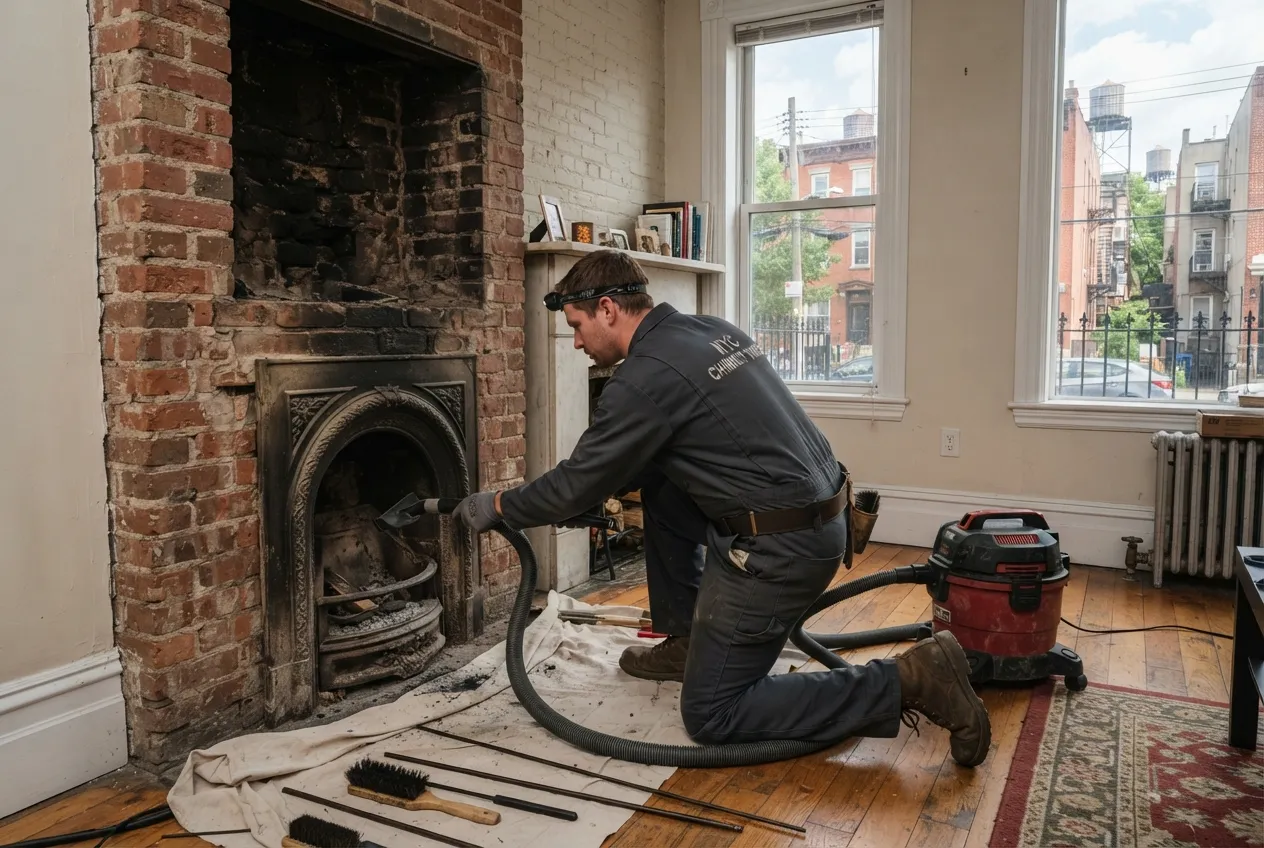
Before we start, we cover the hearth and nearby floors and furniture. We work carefully in finished interiors and shared stairwells. Then we sweep from the firebox up, or from the roof down when the building allows roof access, using brushes sized to your flue.
- Removal of creosote, soot and loose debris from the firebox, smoke chamber and flue
- Check of the damper for a proper seal and smooth operation
- Look for nests, fallen masonry and other blockages
- Visual check of the flue liner, mortar joints and crown where accessible
- Plain-language notes on what we found and what, if anything, needs attention
Inspections under the NFPA 211 standard
The NFPA 211 standard calls for chimneys, fireplaces and vents to be inspected once a year. Chimney professionals use three inspection levels. Level 1 applies when nothing about the system has changed. Level 2 applies when the system changes, for example a new appliance or a switch of fuel, or when the home is sold. Level 3 applies when a hidden hazard has to be reached by opening part of the chimney or building.
Brownstones and apartments in this neighborhood change hands often. If you are buying or selling, a Level 2 inspection gives both sides a clear picture of the chimney's condition before closing.
Ready for cleaner ducts?
Oil-to-gas conversions and flue liners
Many Upper West Side buildings have moved their heating boilers from oil to gas. In New York City, the chimney has to be evaluated as part of that work. A new liner is often needed, because gas exhaust produces acidic condensate that can corrode a masonry flue. If your building converted and the chimney was never re-lined, or you are not sure it was, we can inspect the flue and tell you what we see.
Signs of a damaged flue can include white staining or flaking on the masonry, crumbling tile pieces at the base of the chimney, or moisture where the chimney passes through upper floors.
Timing your sweep around heat season
New York City's heat season runs from October 1 through May 31. During that time, building owners must keep apartments heated to the city's minimum temperatures. Boiler chimneys and fireplaces both see heavy use in those months, so late summer and early fall are the best times to book a sweep and inspection. That way, any repairs can be done before the cold weather arrives.
We also serve nearby Lincoln Square, Carnegie Hill, the Upper East Side, Yorkville and Lenox Hill. If you own more than one property in the area, we can plan the visits together.
More services in Upper West Side
- Air Duct Cleaning in Upper West Side
- Dryer Vent Cleaning in Upper West Side
- HVAC System Cleaning in Upper West Side
- Duct Sanitizing & Odor Removal in Upper West Side