The short answer
Most duct odors in Upper West Side homes come from something physical inside the system, such as dust, mold, moisture or pest debris. ClearPath removes that source first, then applies a sanitizing treatment only when it's appropriate and you've agreed to it.
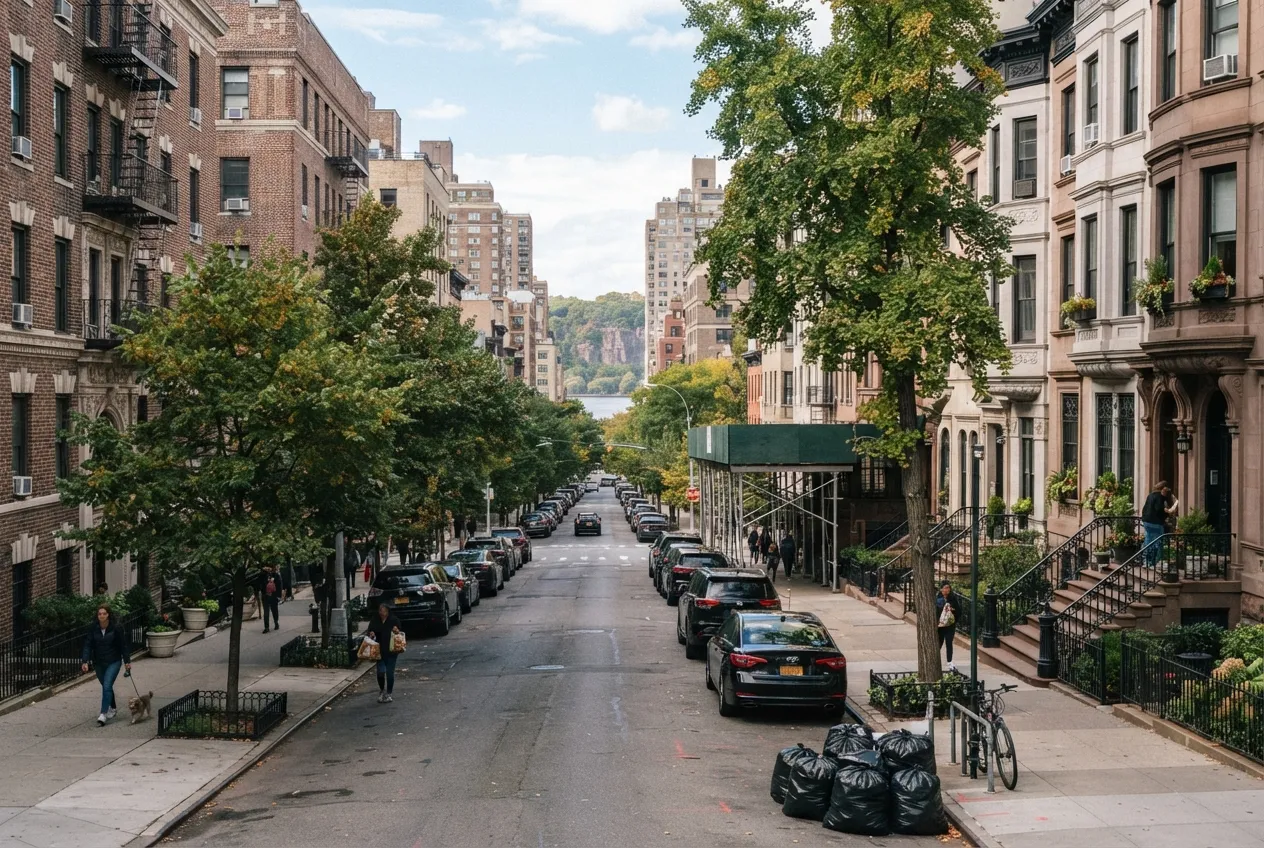
Musty air when the system starts up, a smell left behind by a previous owner's pets, or a stale odor after a mouse problem can often be traced to the ductwork in an Upper West Side home. ClearPath Duct Cleaning provides duct sanitizing and odor removal for brownstones, rowhouses, and pre-war and newer apartments across ZIP codes 10023, 10024, 10025 and 10069. Our certified technicians find the source first and clean out what's causing the smell. Only then do we talk with you about whether a sanitizing treatment makes sense for your system.
Why Upper West Side Ductwork Starts to Smell
Many homes in the neighborhood had ductwork added long after the building went up. In brownstones and rowhouses, ducts often run through tight chases and ceiling cavities where dust and moisture settle. In pre-war apartment buildings, a unit's air handler and short duct runs may sit in a closet or above a dropped ceiling, often close to the kitchen or a bathroom.
Odors almost always have a physical source inside the system:
- Built-up dust and debris that absorb cooking, smoke and pet odors and release them every time air moves
- Mold growth on coils, in drain pans, or in duct sections that stay damp
- Nesting material, droppings or carcasses left by mice or insects
- A musty smell at the start of cooling season. Many apartments rely on building heat during the city's heat season (October 1 through May 31), so their own system may sit unused for months.
Cleaning Comes Before Sanitizing
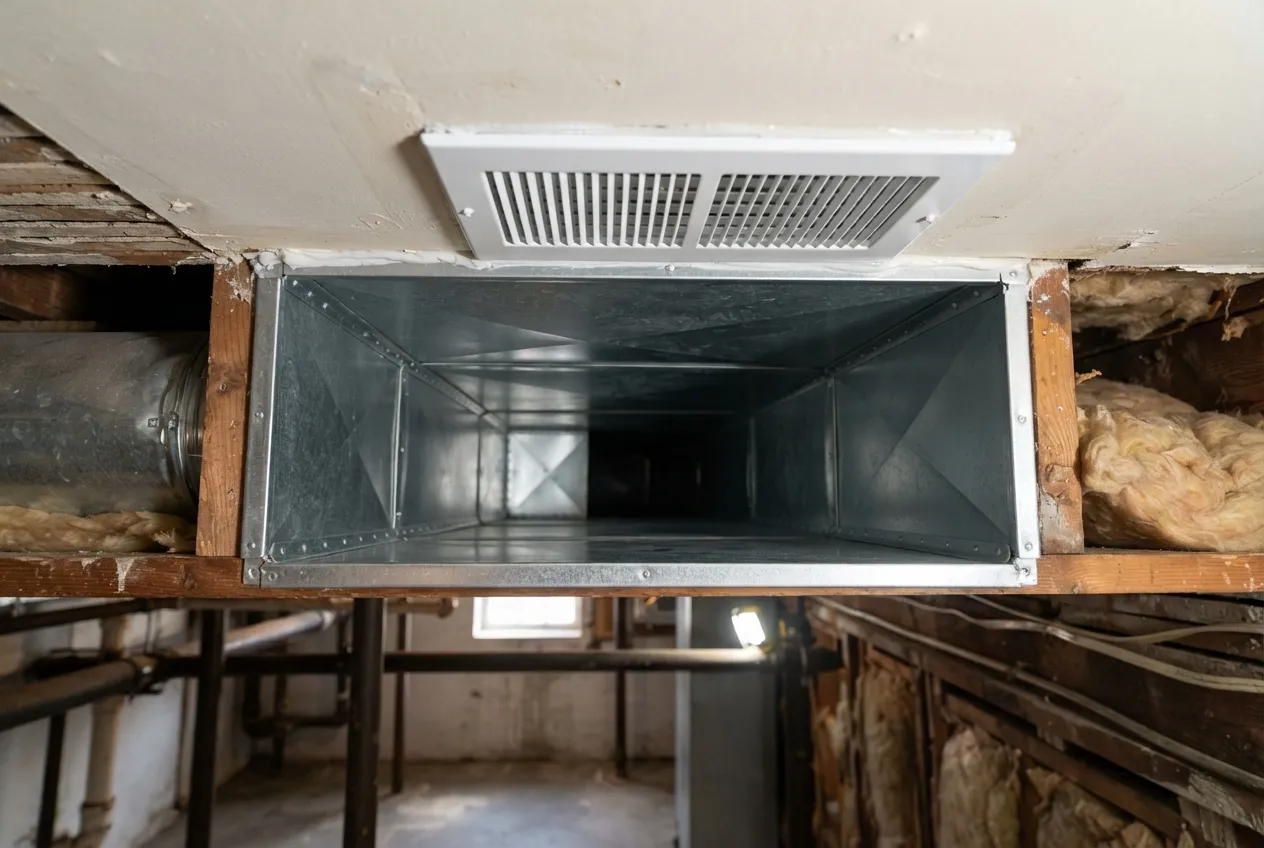
The U.S. EPA advises cleaning air ducts when there is substantial visible mold growth, signs of vermin, or excessive dust and debris. Those same conditions are the usual causes of odor. Spraying a deodorizer into dirty ductwork may cover a smell for a short time, but the source stays behind and the odor comes back. Our first step is always to remove the material that's causing the problem.
The EPA also urges caution with chemical treatments in ductwork, and we agree. Before we apply anything, we explain what the product is, where it would go and why we're recommending it, and the decision is yours. Sometimes the honest answer is that a section can't be cleaned well enough, such as fiberglass-lined duct with mold growth. In that case we'll tell you replacement is the better route.
What a Sanitizing and Odor Removal Visit Includes
Every home is different, but a typical visit follows these steps:
- Inspect the registers, accessible duct runs, air handler, coil area and drain pan to locate the source of the odor
- Show you what we find, including any mold, pest debris or moisture problems
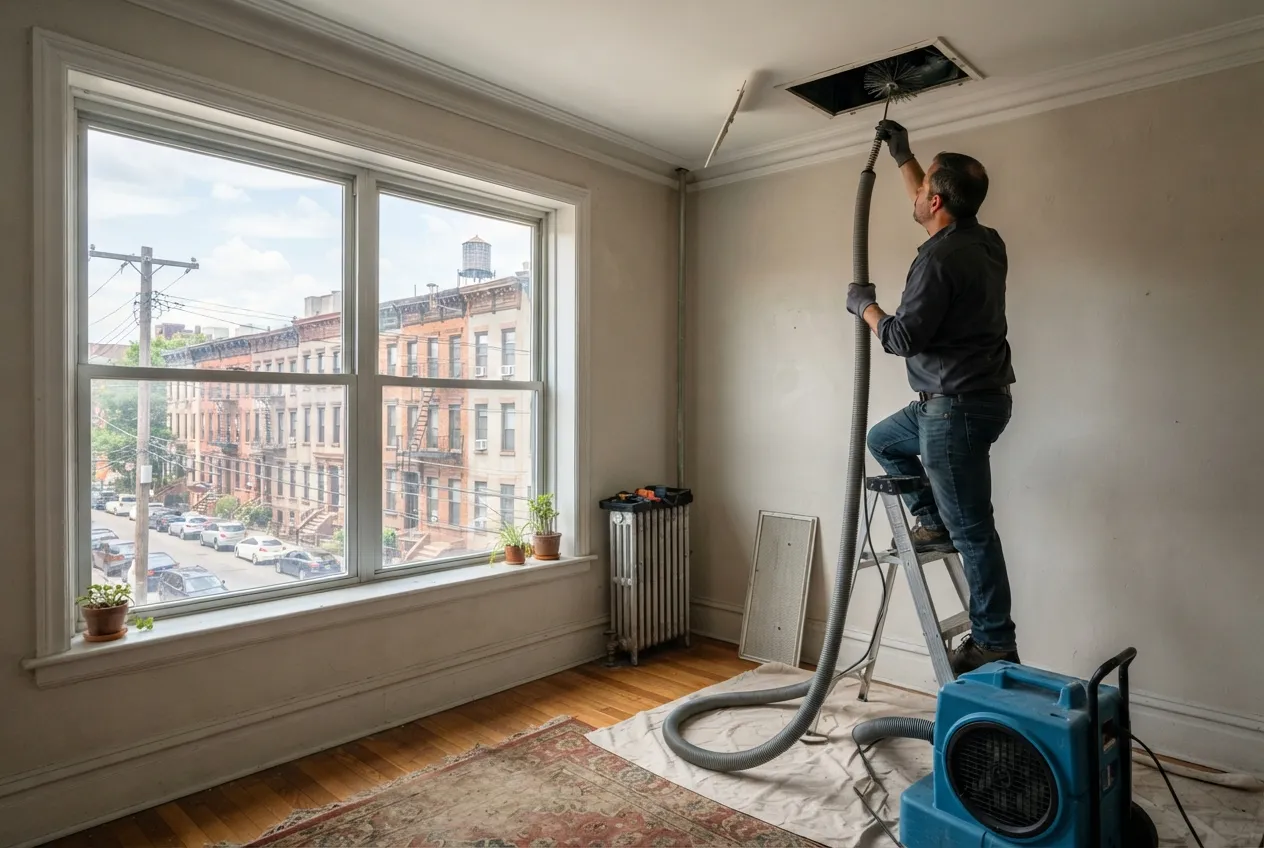
- Clean the ductwork under negative pressure so loosened debris is pulled out instead of blown into your rooms
- Clean registers and grilles, and point out filter or drainage issues that could bring the smell back
- Apply a sanitizing or deodorizing treatment only to the areas that need it, and only with your approval
- Walk you through the results and anything outside the duct system that still needs attention
Ready for cleaner ducts?
Setting Realistic Expectations
Duct cleaning and sanitizing can remove odor sources and leave your system cleaner. According to the EPA, however, duct cleaning has not been shown to prevent health problems, and we won't promise that it will. If someone in your home has allergies or breathing concerns, talk with a medical professional about what will actually help.
Some odors that seem to come from the vents actually start somewhere else. Common examples are a dry drain trap, a wall cavity, or air drifting in from a neighboring unit. If our inspection points to a source outside the duct system, we'll tell you so you don't pay for work that won't fix the smell.
Working in Upper West Side Buildings
Co-op and condo buildings often have rules about contractor access, elevator reservations and work hours. We're glad to coordinate with your super or managing agent ahead of time. Inside your home, we protect floors and furniture around each work area. In brownstones and rowhouses, we plan around multiple floors and narrow stairways.
Our office is on the Upper East Side, about a mile from the Upper West Side, so scheduling a visit is straightforward. We also serve nearby Lincoln Square, Carnegie Hill, the Upper East Side, Yorkville and Lenox Hill.
More services in Upper West Side
- Air Duct Cleaning in Upper West Side
- Dryer Vent Cleaning in Upper West Side
- HVAC System Cleaning in Upper West Side
- Chimney Sweep in Upper West Side